The SAVRN Standard
Seven principles. The minimum to expect from a controlled AI environment: a reskilled workforce, independent operations, data custody, customer model capability, supply assurance, infrastructure control and power provision, brought together under one accountable operator.
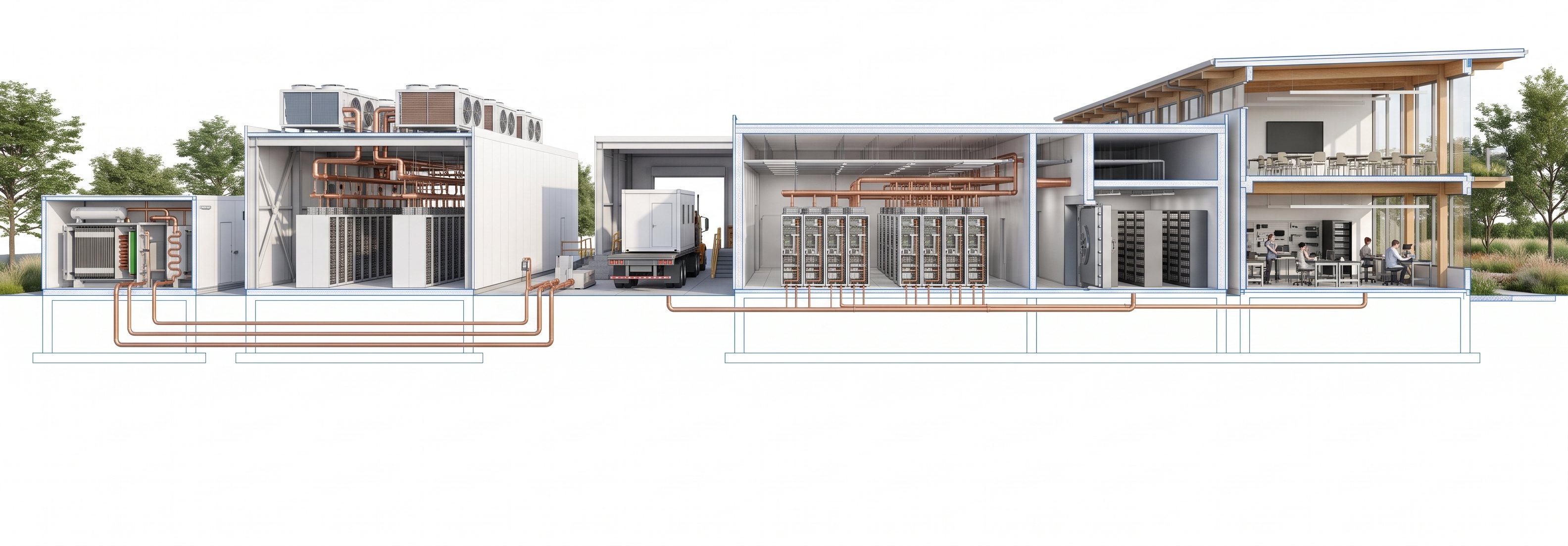
- 01 Workforce reskilling A training institute reskills the American workforce The Standard requires A training institute reskills the American workforce to operate, maintain and use the environment. That is where the value is delivered. The market today Not yet assessed for the 6 documented offerings. SAVRNBuilt in, by design.
- 02 Independent operations Runs with no outside connection The Standard requires The environment operates with no outside connection, running its own identity, management, inference, monitoring and recovery. The market today 0 of 6 documented offerings supported, 5 partial. SAVRNBuilt in, by design.
- 03 Data custody Data, model artifacts, logs and backups stay on premises The Standard requires On-premises data custody: customer data, storage, model artifacts, logs and backups remain inside private, controlled, sovereign boundaries. The market today 0 of 6 documented offerings supported, 6 partial. SAVRNBuilt in, by design.
- 04 Customer model capability The customer's data trains a local model built for its use The Standard requires The value is in the customer's data. That data trains a local model built for the customer's specific use, not a frontier model that is not trained for it. The market today 0 of 6 documented offerings supported, 4 partial. SAVRNBuilt in, by design.
- 05 Supply assurance A controlled global supply chain for the infrastructure The Standard requires The global supply chain behind the infrastructure is controlled, with traceable provenance, controlled procurement, maintenance rights and a documented replacement strategy for critical hardware, software and models. The market today 0 of 6 documented offerings supported, 6 partial. SAVRNBuilt in, by design.
- 06 Infrastructure control Documented customer rights and a named accountable operator The Standard requires Dedicated compute, networking and facility infrastructure have documented customer rights and a named accountable operator. The market today 0 of 6 documented offerings supported, 6 partial. SAVRNBuilt in, by design.
- 07 Power provision Dedicated on-site generation, with resilience inside the scope The Standard requires Dedicated on-site generation and defined resilience are included in the accountable service scope. The market today None of the 6 documented offerings establishes it. SAVRNBuilt in, by design.
7 offerings, measured against the Standard
None of the 6 documented offerings is rated Supported on any principle. Power provision is not established for any of them. Workforce reskilling has not been assessed for them yet. SAVRN wrote the Standard and builds to every principle.
- Supported
- Partial
- Not established
- Not yet assessed






What each principle requires, and why it's there
-
01
Workforce reskilling
The Standard requiresA training institute reskills the American workforce to operate, maintain and use the environment. That is where the value is delivered.
Documented withName the programs, hands-on training hours, credentials and the roles they prepare people for.
Why it mattersSAVRN treats workforce reskilling as the first principle, not the last, because every other principle depends on people who can operate it. A campus that generates its own power, controls its own supply chain and keeps data on premises still needs technicians, operators and engineers who can run it, day to day, for decades. The SAVRN Training Institute sits on every campus for that reason: it teaches the American workforce to operate, maintain and use the environment, and it feeds SAVRN's own hiring pipeline directly from the community around each site. Building the workforce first is what makes every other principle sustainable, rather than a one-time capital project.
-
02
Independent operations
The Standard requiresThe environment operates with no outside connection, running its own identity, management, inference, monitoring and recovery.
Documented withProven with a proposed common 72-hour disconnected test. Specify workload, thresholds, updates and support dependencies.
Why it mattersAn environment that depends on an outside connection to keep running is not actually independent, no matter how well it is otherwise built. SAVRN's environments run their own identity, management, inference, monitoring and recovery, with no outside connection required to operate day to day. That independence is proven, not assumed: SAVRN proposes a common 72-hour disconnected test as the standard for verifying it, with the workload, thresholds, updates and support dependencies specified in advance, so the test means the same thing for every offering measured against it.
-
03
Data custody
The Standard requiresOn-premises data custody: customer data, storage, model artifacts, logs and backups remain inside private, controlled, sovereign boundaries.
Documented withDefine key authority, retention, deletion and transfer controls.
Why it mattersOn-premises data custody is both a control principle and a cost principle. Keeping customer data, storage, model artifacts, logs and backups inside private, sovereign boundaries means the customer, not a third party, holds the keys, the retention policy and the deletion rights. It also means the customer is not paying an outside provider's storage and egress economics indefinitely. Managing data on premises lets SAVRN's customers extend and maintain their own data environment on their own terms, with the savings that come from owning the infrastructure instead of renting access to it.
-
04
Customer model capability
The Standard requiresThe value is in the customer's data. That data trains a local model built for the customer's specific use, not a frontier model that is not trained for it.
Documented withDefine data rights, evaluation, promotion and rollback. Identify retrieval-only services separately.
Why it mattersThe value in a customer's AI environment is in the customer's own data, not the frontier model. SAVRN's approach trains a model on that data, inside the customer's own environment, until it performs better for that customer's specific use than a stock frontier model can, because the frontier model was never trained on it. Frontier model access from a lab is a starting point, not the end state; a model shaped by a customer's own operations, history and edge cases is worth more to that customer than general access to someone else's model.
-
05
Supply assurance
The Standard requiresThe global supply chain behind the infrastructure is controlled, with traceable provenance, controlled procurement, maintenance rights and a documented replacement strategy for critical hardware, software and models.
Documented withDisclose dependencies.
Why it mattersA controlled AI environment is only as reliable as the supply chain behind it. SAVRN keeps every component of that chain, hardware, software and the models themselves, under its own control, with traceable provenance and a documented replacement strategy for anything critical. The alternative is what most of the market lives with today: dependencies split across vendors with no visibility into where a part comes from or how long a replacement will take. SAVRN's approach is built specifically to avoid the long delays that come from an uncontrolled or opaque supply chain.
-
06
Infrastructure control
The Standard requiresDedicated compute, networking and facility infrastructure have documented customer rights and a named accountable operator.
Documented withOwnership or enforceable control rights may qualify.
Why it mattersDedicated compute, networking and facility infrastructure only count toward the Standard when a named operator holds documented rights over all three, not just the servers. SAVRN's partnership with IntelliFlex is what makes that control real: IntelliFlex brings the operating discipline and facility management that lets SAVRN name one accountable operator for the full stack, from the network fabric to the building envelope, instead of splitting responsibility across a landlord, a colocation provider and a separate managed-services vendor. That single line of accountability is what a customer is actually buying when they buy infrastructure control.
-
07
Power provision
The Standard requiresDedicated on-site generation and defined resilience are included in the accountable service scope.
Documented withState ownership or contractual rights, fuel dependencies, supported critical load and commissioning evidence.
Why it mattersSAVRN campuses are not connected to the surrounding grid. Power comes from on-site fuel cells, generated and controlled on the same campus that uses it, so there is no utility interconnection queue and no dependency on shared grid capacity. On-site generation is also cleaner than drawing from a regional grid that still runs on a mixed fuel stack, though SAVRN is careful not to overstate that difference. What can be said plainly is that dedicated on-site generation gives the customer defined resilience and a supported critical load inside the accountable service scope, backed by commissioning evidence, rather than a shared claim on someone else's grid.
Seven references, one system
Capital, delay, policy, water, grid, permits and scarcity are one system seen from seven sides. Each reference is primary-sourced, refreshed on a schedule, and links into the others, so a project can be followed from the money committed to the docket that stopped it.