# AI data center power efficiency
> AI data centers require coordinated chip-to-grid strategies to manage millisecond-scale power swings and maintain grid stability.
Source: https://savrn.com/blog/ai-data-center-power-efficiency
Author: Chad Everett Harris
Published: 2026-10-14
---
AI data center power efficiency now requires millisecond-scale coordination between chips and the grid, because AI workloads can cause power swings that traditional infrastructure cannot handle. At the Data Center World Power conference in September 2026, panelists described oscillations occurring in millisecond increments, a timeframe the grid was not designed to track or counter quickly 3.
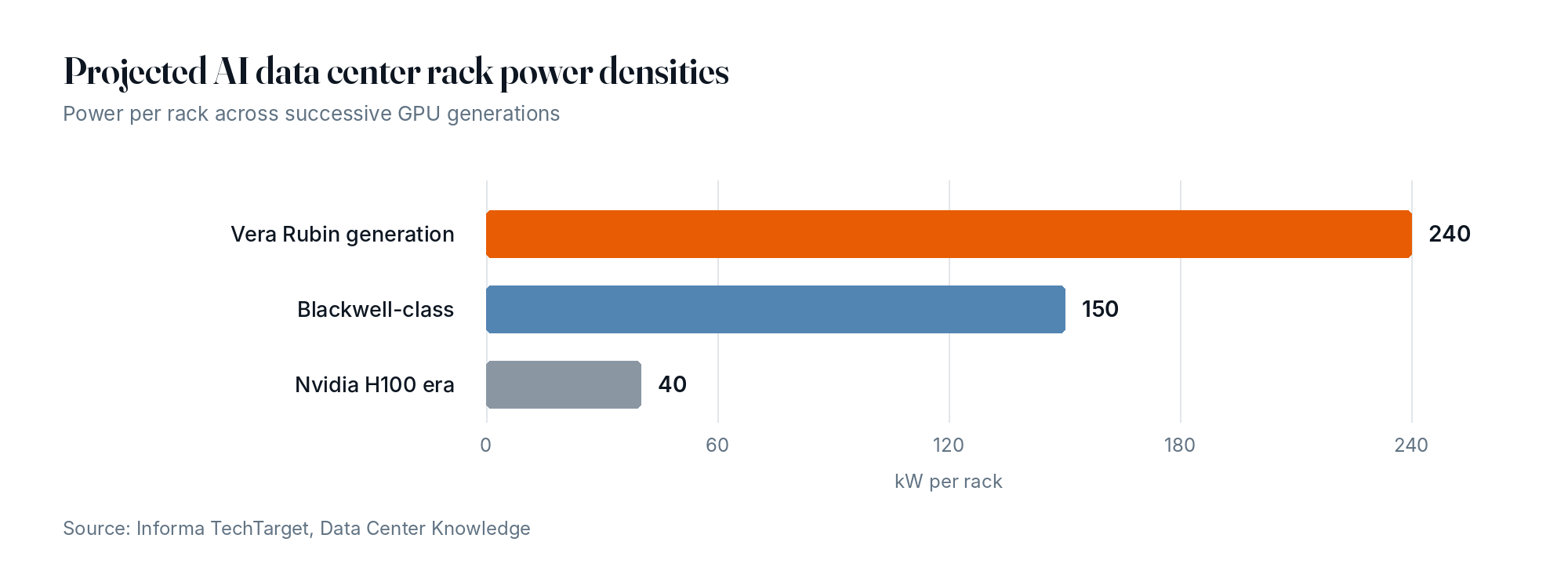
Nvidia’s Blackwell-class systems push rack power to roughly 150 kW, with the Vera Rubin generation targeting around 240 kW per rack, and projections reaching up to 1 MW per rack as 800-volt DC distribution emerges 3. Oracle’s Stargate data center complex, 60% to 70% operational, has brought energy and power-generation expertise in-house because compute demand has outpaced grid build-out, with delays in substations and transmission 3.
To blunt the impact of rapid load swings, Nvidia has added rack-level storage and controls to smooth fast excursions within the rack and keep the AC input within grid requirements 3. Oracle’s Rajesh Gopanath warned that subsynchronous oscillations, if excited by AI data center behavior, can induce mechanical resonance leading to catastrophic turbine shaft failure 3.
Sai Somayajula of Nvidia stressed that no single company can solve this challenge alone; it requires coordinated effort among chip providers, data center operators, utilities, and infrastructure providers 3. The industry is moving beyond capacity-focused planning toward integrated infrastructure design that treats power, cooling, and compute as interdependent systems 12.
Key figures The numbers behind this piece, as the sources state them
AI power oscillation speed
<100 ms
AI workloads can swing power up to 100% of rated load in under 100 ms, threatening grid stability (Source 3). 3 Informa TechTarget, Data Center Knowledge, Oct 06, 2026
Oscillation amplitude
100%
AI workloads can trigger power swings up to 100% of rated load, occurring in millisecond increments (Source 3). 3 Informa TechTarget, Data Center Knowledge, Oct 06, 2026
Project Southgate planned capacity
1.6GW
Nvidia-backed Project Southgate in Australia planned 1.6GW of AI capacity but collapsed after 12 months with only a fraction built (Source 2). 2 Light Reading, Informa TechTarget, Oct 07, 2026
Project Southgate value
$51B
The Firmus-CDC Australian AI data center project, now terminated, was valued at $51 billion (Source 2). 2 Light Reading, Informa TechTarget, Oct 07, 2026
## AI power oscillations disrupt legacy grid and infrastructure design
AI workloads can cause power swings in millisecond increments, a timescale the traditional grid was not designed to track or counter quickly 3. Panelists at the Data Center World Power conference in September 2026 warned that extreme events, such as a sudden drop of hundreds of megawatts in AI power draw, could trigger wide-area disturbances if not mitigated 3.
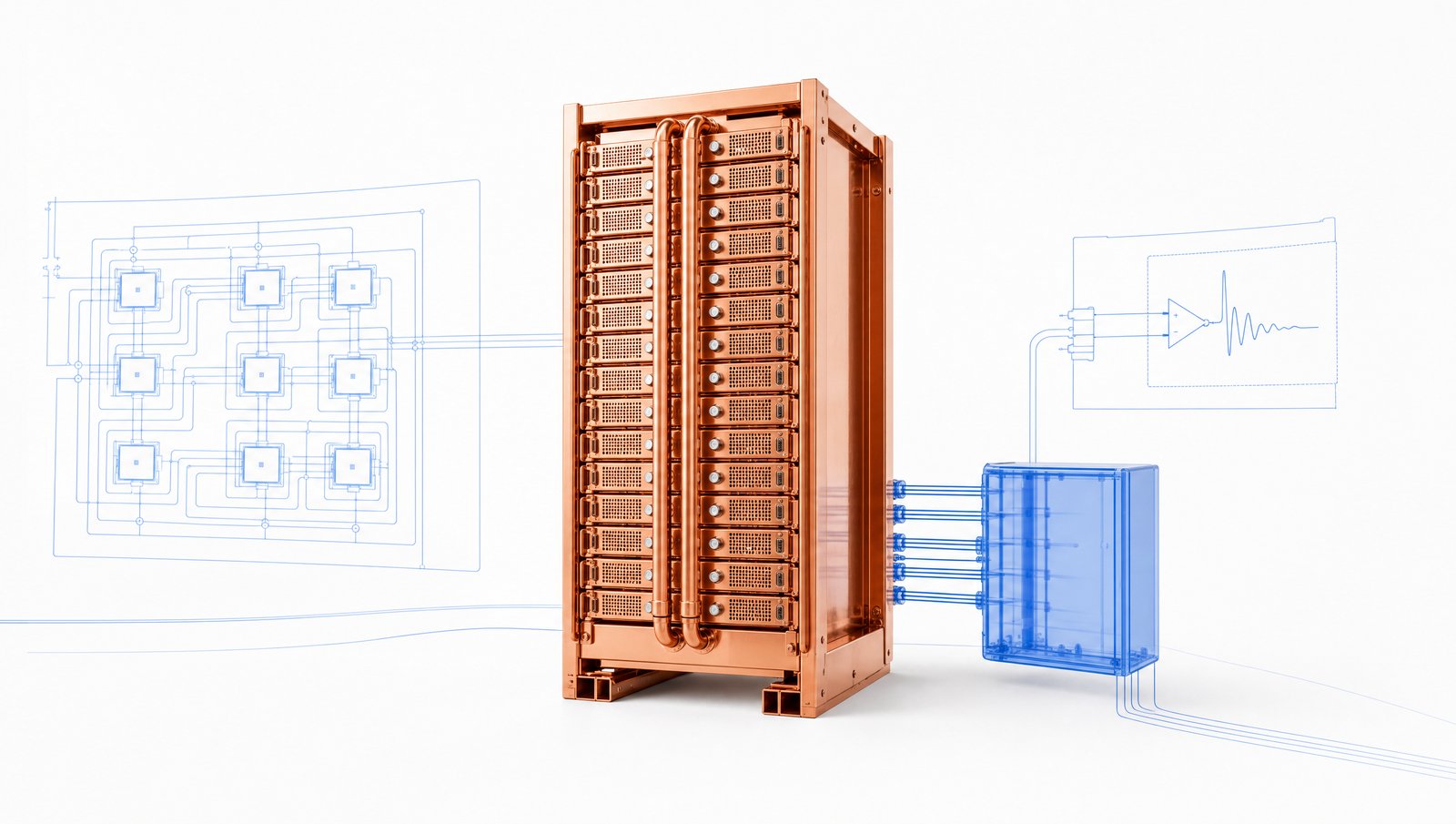
Rack-level power fluctuation sensors detect millisecond-scale oscillations to prevent grid instability during AI workload surges.
### Rack power density and grid interaction
Rack power density has risen sharply in recent years, with conventional data center racks historically using 5-10 kW, Nvidia’s H100 era reaching about 40 kW per rack, Blackwell-class systems pushing to roughly 150 kW, and the Vera Rubin generation targeting around 240 kW per rack 3. Sai Somayajula, principal electrical design engineer at Nvidia, noted that projections reach up to 1 MW per rack as 800-volt DC distribution emerges 3. To blunt the impact of rapid load swings, Nvidia has added rack-level storage and controls to smooth fast excursions within the rack and keep the AC input within grid requirements 3.
In addition, Nvidia’s DSX architecture, introduced earlier in 2026, incorporates high-speed telemetry and advanced analytics to characterize and mitigate oscillations, allocates unused power headroom to GPUs, and reduces cooling power via warmer-water liquid cooling 3. Somayajula emphasized that these measures are necessary because AI workloads, rack density, and power dynamics require a rethink of how data centers have been designed 3. Somayajula stressed that solving these challenges requires industry-wide collaboration across chip providers, data center operators, utilities, and infrastructure providers 3.
### Subsynchronous oscillations and infrastructure resilience
Rajesh Gopanath of Oracle warned that subsynchronous oscillations are frequencies below the US grid’s 60 Hz operating frequency, and if excited by AI data center behavior, they can induce mechanical resonance leading to catastrophic turbine shaft failure 3. Gopanath stressed that supporting a 1 GW campus with a handful of 200 MW turbines creates single points of failure, and smaller building blocks improve resilience without making operations unmanageable 3. Gopanath also noted that Oracle has brought energy and power-generation expertise in-house because compute demand has outpaced grid build-out, with delays in substations and transmission 3.
Gopanath observed that Oracle’s Stargate data center complex in Abilene, Texas, is 60% to 70% operational, with campuses planned at a gigawatt scale 3. “We have to find the sweet spot to make sure that we have the right level of availability down to the rack level,” Gopanath said 3.
### Legacy infrastructure and emerging contamination risks
Increased airflow from high-density AI infrastructure can mobilize zinc whiskers from legacy raised-floor systems, threatening equipment reliability 6. Zinc whiskers are microscopic, electrically conductive crystalline filaments that can grow from electroplated zinc surfaces, particularly the underside of older raised-floor tiles 6. As data centers move more air to cool dense GPU clusters, contaminants become airborne more easily and travel toward equipment, potentially creating unintended conductive paths and signal disturbances 6.
Routine facility work can increase exposure by disturbing accumulated whiskers and releasing them into the environment 6. Moving floor tiles, running new cabling, reconfiguring equipment, or conducting nearby construction may all contribute to whisker release 6. Conventional cleaning practices may be counterproductive: vacuuming without HEPA filtration can aerosolize whiskers and release them back into the environment through the equipment’s exhaust, and sweeping or brushing can disturb susceptible surfaces and shed additional whiskers 6.
Identification remains the first step in managing the risk: high-intensity oblique lighting can help reveal whiskers through reflection, allowing facility teams to inspect susceptible surfaces before beginning cleaning or maintenance activities 6. Once contamination is identified, facility teams should focus on both containment and removal, including isolating work areas, controlling airflow, and protecting nearby equipment intakes 6. Source remediation may include replacing affected floor tiles or other components with non-whiskering alternatives 6.
What to take from this
AI workloads can cause power swings in millisecond increments, a timescale the traditional grid was not designed to track or counter quickly.
Rack power density has risen sharply in recent years, with conventional data center racks historically using 5-10 kW, Nvidia’s H100 era reaching about 40 kW per rack, Blackwell-class systems pushing to roughly 150 kW, and the Vera Rubin generation targeting around 240 kW per rack.
Rajesh Gopanath of Oracle warned that subsynchronous oscillations are frequencies below the US grid’s 60 Hz operating frequency, and if excited by AI data center behavior, they can induce mechanical resonance leading to catastrophic turbine shaft failure.
Increased airflow from high-density AI infrastructure can mobilize zinc whiskers from legacy raised-floor systems, threatening equipment reliability.
Power usage effectiveness (PUE) has improved from 2.50 in 2007 to 1.52 in 2026, with newer facilities achieving PUEs of 1.3 or lower.
## HPE Gen13 servers deploy CPU-GPU balance for enterprise AI
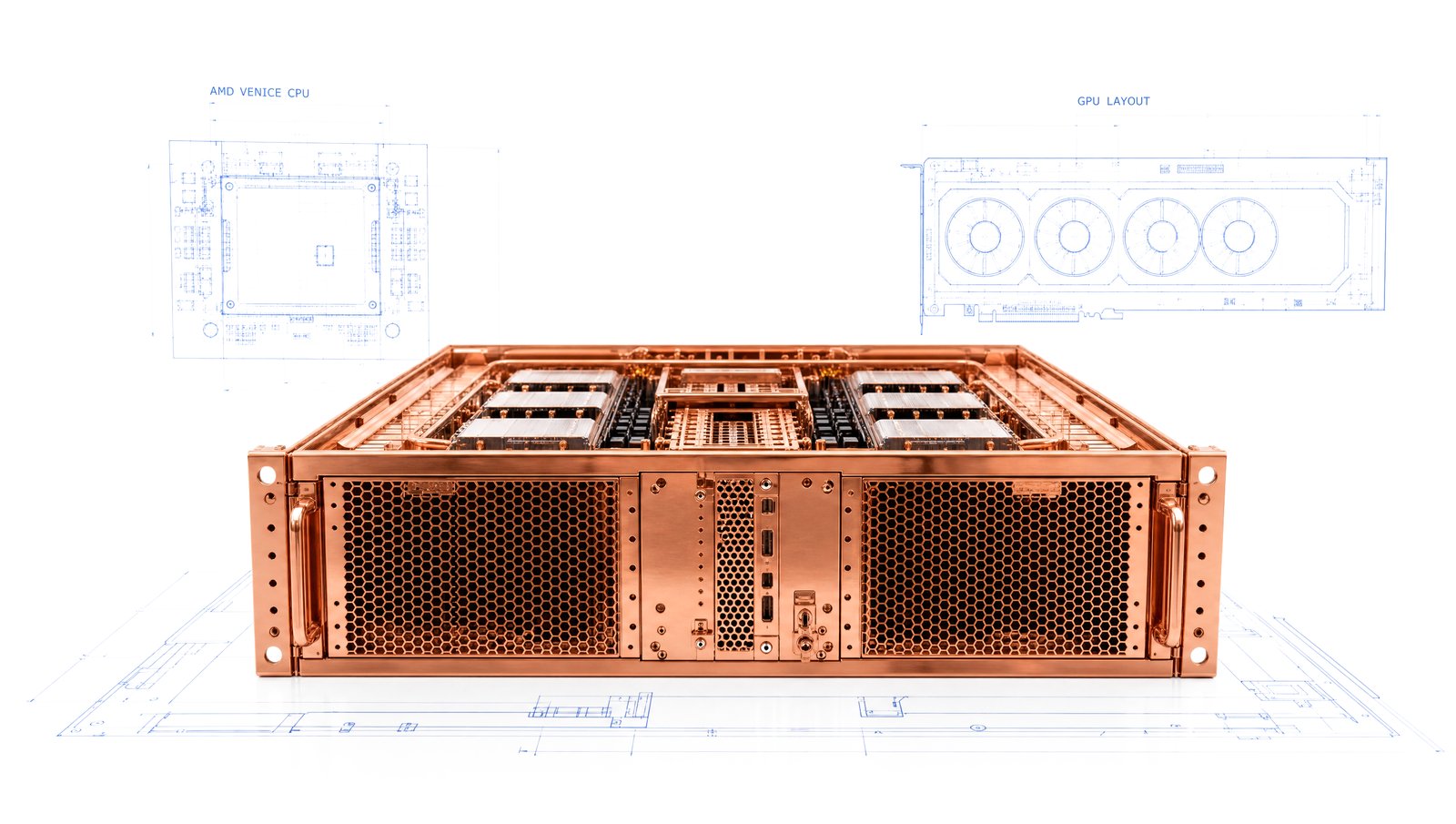
HPE launched four ProLiant Gen13 servers powered by AMD’s sixth-generation Epyc 9006 “Venice” CPUs, targeting enterprise AI inference, agentic AI, and traditional workloads 1.
Rack power demands rose from 5-10 kW historically to ~240 kW for Vera Rubin, with projections up to 1 MW. Source: Informa TechTarget, Data Center Knowledge.The DL585a Gen13 server’s CPU-GPU balance enables efficient agentic AI inference by distributing workloads across specialized processors.
### CPU-GPU division of labor in agentic AI workflows
The DL585a Gen13 server features up to eight GPUs and two AMD Venice processors to support AI inference, agentic AI, retrieval-augmented generation model fine-tuning, and analytics 1. The three CPU-focused servers handle orchestration and tool calls in agentic AI systems, while GPUs manage inference 1.
Matt Kimball of Moor Insights & Strategy noted that orchestration demands many CPUs because agents and subagents make continuous calls, creating high traffic, and added that AMD’s Venice chip, with its high core count and strong single-threaded performance, supports this workload well 1.
According to Chris Bradley, director of mainstream compute customer advocacy and technical enablement at HPE, the ProLiant Gen13 systems will include new automated security capabilities within HPE Integrated Lights-Out 8, such as support for self-encrypting drives and expanded post-quantum cryptography readiness, and HPE Compute Ops Management software adds low-touch onboarding and near-real-time power capacity insights 1.
The DL525, a 1U, single-socket server with one AMD Venice chip, is available in November 2026 1. The XD245 and XD285 are both rack-scale systems scheduled for 2027 1. The XD245 is a four-node, liquid-cooled system, while the XD285 is a two-node, air-cooled system 1.
## Systems-level AI infrastructure design integrating power, cooling, and compute
### Interdependencies of power, cooling, and compute
AI infrastructure must integrate power, cooling, and compute to optimize efficiency, resilience, and adaptability, not just capacity 12. For years, data center design focused on building enough capacity to meet demand, but AI’s dynamic, high-density workloads require a different approach 12. A change to the power architecture can affect cooling requirements, while compute utilization changes both power and cooling needs 12. These interdependencies mean efficiency cannot be addressed by a single team in isolation; coordination across disciplines is essential to balance capacity against effective resource use 12.
### Scaling power and cooling in tandem
Power supply and cooling must scale together to sustain continuous AI processing, as a gap in either undermines system performance 5. A rack designed for 5 kW will not serve a 20-kW AI node, and insufficient power or cooling can throttle AI performance before deployment even begins 5. Reliable power delivery matters as much as capacity, and organizations must assess how much power their environment can consistently supply alongside whether cooling systems can handle the additional heat 5. Evaluating how systems work together rather than in isolation is essential 5.
### Holistic infrastructure readiness
AI infrastructure readiness spans power, cooling, security, cost strategy, and scalability 5. Security considerations also intersect with infrastructure design: physical access controls, network segmentation, and model protection must be embedded in the infrastructure plan, not added later 5. A gap in any layer, physical, network, or application, can expose sensitive data or compromise model integrity 5. Scalability is not just about adding compute; it includes expanding power delivery, cooling capacity, and network bandwidth in tandem 5. Infrastructure built for today’s workload can become a constraint tomorrow if scalability is not designed in from the outset 5.
### Beyond PUE: comprehensive efficiency metrics
Power usage effectiveness (PUE) has improved from 2.50 in 2007 to 1.52 in 2026, with newer facilities achieving PUEs of 1.3 or lower 12. PUE alone no longer captures modern infrastructure efficiency 12. Operators now track additional metrics: water usage effectiveness (WUE), carbon usage effectiveness (CUE), energy reuse effectiveness (ERE), compute power efficiency (CPE), and grid-aware operations (GAE) 12. Together, these metrics show trade-offs between capacity, demand, and utilization 12.
### Multi-dimensional sustainability and operational metrics
WUE measures water consumed per unit of IT energy, especially relevant for evaporative cooling systems 12. CUE quantifies carbon emissions tied to IT energy use 12. ERE assesses how much waste heat or power is reused elsewhere on-site 12. CPE measures compute performance per unit of power consumed 12. GAE evaluates how workloads respond to grid signals, shifting or reducing consumption during peak times 12.
## Urban vertical data center trade-offs in Kansas City
Steve Austin, founder and CEO of Revitalization Unlimited, estimates total development costs at $183 million, or $1,300 per square foot 4.
### Mechanical density and workload justification
Of the building’s 141,000 gross square feet, 109,000 would house mechanical infrastructure to support the IT load 4. Austin argues the location serves low-latency inference workloads, citing proximity to existing carrier infrastructure, planned diverse fiber entrances, and a carrier-neutral design 4.
JLL’s Michael Martin says clients typically seek solutions to business problems rather than downtown addresses specifically 4. He identifies financial services, telecommunications, content delivery, and inference as the most likely urban users, while large AI training clusters generally favor suburban sites with abundant land and power 4.
IDC’s Luis Fernandes notes most vendors design power and cooling equipment for horizontal placement, with little consideration for vertical deployment 4. Weight, freight elevator dimensions, and crane access become critical constraints in tall structures 4. Replacing equipment may require coordination with surrounding streets, and pumping cooling water introduces demands distinct from conventional commercial towers 4.
Fernandes cautions that reduced land consumption does not necessarily yield a smaller environmental footprint, stating there is no data to suggest vertical builds reduce overall environmental impact 4. Austin’s design targets a power usage effectiveness (PUE) of 1.25 and proposes 30 MW of on-site Bloom fuel cells as the primary electricity source 4. Natural gas is expected to be a key operating expense, meaning grid independence does not eliminate environmental impacts 4.
By the numbers Figures from this section, as the sources state them
$183 million
Steve Austin, founder and CEO of Revitalization Unlimited, estimates total development costs at $183 million, or $1,300 per square foot . 4 Informa TechTarget, Data Center Knowledge, Oct 05, 2026
30 MW
Austin’s design targets a power usage effectiveness (PUE) of 1.25 and proposes 30 MW of on-site Bloom fuel cells as the primary electricity source . 4 Informa TechTarget, Data Center Knowledge, Oct 05, 2026
## How SAVRN builds for this
SAVRN builds AI factories that generate their own power on site and run water-free cooling, with a training institute at the front of every campus that reskills the local workforce. SAVRN also publishes and maintains public research tools that track the same trends this article covers: the [Data Center Moratorium Tracker](/data-center-moratorium-tracker), the [Water Tracker](/data-center-water-tracker), the [Data Center Delay Tracker](/data-center-delay-tracker), the [Grid Operator Watchlist](/data-center-grid-operator-watchlist), the [Capital Atlas](/data-center-capital-atlas) and the US Data Center Map.
## What to do next
AI workloads create millisecond-scale power oscillations that legacy grid designs cannot track or counter, and rack densities now demand integrated power, cooling, and compute systems. Vertical urban sites can serve low-latency needs but require massive mechanical infrastructure investment.
1. Operators should deploy real-time telemetry and fast-acting controls at the rack and row level to detect and smooth millisecond power swings before they reach the utility feeder.
2. Utilities should co-develop interconnection studies and dynamic tariff structures with operators that reflect AI’s sub-second ramp rates and the value of flexible load participation.
3. Community leaders should engage early on vertical project designs to align mechanical infrastructure footprints, noise mitigation, and fiber diversity with neighborhood planning goals.
4. Capital partners should underwrite integrated power-cooling-compute packages rather than siloed capacity blocks, recognizing that resilience depends on their joint performance.
5. Regulators should update grid codes and permitting pathways to recognize millisecond-scale grid services from data centers and streamline approvals for high-density urban deployments.
6. Operators should adopt CPU-GPU balanced architectures that match inference workload profiles, reducing stranded power and improving thermal uniformity across high-density racks.
## Frequently asked questions
### What millisecond-scale power oscillations do AI workloads create that challenge the grid?
AI workloads can cause power swings in millisecond increments, a timescale the traditional grid was not designed to track or counter quickly 3. Panelists at the Data Center World Power conference in September 2026 warned that extreme events, such as a sudden drop of hundreds of megawatts in AI power draw, could trigger wide-area disturbances if not mitigated 3.
### What rack power densities are Nvidia’s Blackwell and Vera Rubin systems targeting?
Nvidia’s Blackwell-class systems push rack power to roughly 150 kW, with the Vera Rubin generation targeting around 240 kW per rack 3. Projections reach up to 1 MW per rack as 800-volt DC distribution emerges 3.
### How is Nvidia mitigating rapid load swings at the rack level?
Nvidia has added rack-level storage and controls to smooth fast excursions within the rack and keep the AC input within grid requirements 3. The DSX architecture incorporates high-speed telemetry and advanced analytics to characterize and mitigate oscillations, allocates unused power headroom to GPUs, and reduces cooling power via warmer-water liquid cooling 3.
### What are subsynchronous oscillations and why are they dangerous for grid infrastructure?
Subsynchronous oscillations are frequencies below the US grid’s 60 Hz operating frequency, and if excited by AI data center behavior, they can induce mechanical resonance leading to catastrophic turbine shaft failure 3. Rajesh Gopanath of Oracle warned that supporting a 1 GW campus with a handful of 200 MW turbines creates single points of failure 3.
### Why has Oracle brought energy and power-generation expertise in-house for the Stargate complex?
Oracle has brought energy and power-generation expertise in-house because compute demand has outpaced grid build-out, with delays in substations and transmission 3. The Stargate data center complex in Abilene, Texas, is 60% to 70% operational, with campuses planned at a gigawatt scale 3.
### How do zinc whiskers threaten equipment reliability in high-density AI data centers?
Increased airflow from high-density AI infrastructure can mobilize zinc whiskers from legacy raised-floor systems, threatening equipment reliability 6. Zinc whiskers are microscopic, electrically conductive crystalline filaments that can grow from electroplated zinc surfaces, particularly the underside of older raised-floor tiles 6.
### What maintenance activities can release zinc whiskers into the data center environment?
Moving floor tiles, running new cabling, reconfiguring equipment, or conducting nearby construction may all contribute to whisker release 6. Routine facility work can increase exposure by disturbing accumulated whiskers and releasing them into the environment 6.
### How have comprehensive efficiency metrics evolved beyond PUE in modern data centers?
Power usage effectiveness (PUE) has improved from 2.50 in 2007 to 1.52 in 2026, with newer facilities achieving PUEs of 1.3 or lower 12. Operators now track additional metrics: water usage effectiveness (WUE), carbon usage effectiveness (CUE), energy reuse effectiveness (ERE), compute power efficiency (CPE), and grid-aware operations (GAE) 12.
### What infrastructure trade-offs do vertical urban data centers face compared to horizontal deployments?
Of the building’s 141,000 gross square feet, 109,000 would house mechanical infrastructure to support the IT load 4. Weight, freight elevator dimensions, and crane access become critical constraints in tall structures, and pumping cooling water introduces demands distinct from conventional commercial towers 4.
### How do HPE ProLiant Gen13 servers balance CPU and GPU resources for agentic AI workflows?
The DL585a Gen13 server features up to eight GPUs and two AMD Venice processors to support AI inference, agentic AI, retrieval-augmented generation model fine-tuning, and analytics 1. The three CPU-focused servers handle orchestration and tool calls in agentic AI systems, while GPUs manage inference 1.
Sources
1. [HPE’s Gen13 Signals Enterprise AI Shift to CPU-GPU Balance](https://www.datacenterknowledge.com/servers/hpe-s-gen13-signals-enterprise-ai-shift-to-cpu-gpu-balance), Informa TechTarget, Data Center Knowledge, Oct 07, 2026.
2. [Firmus, CDC end planned $51B Australian AI buildout](https://www.lightreading.com/data-centers/firmus-cdc-end-planned-51b-australian-ai-buildout), Light Reading, Informa TechTarget, Oct 07, 2026.
3. [AI Power Spikes Demand Chip-to-Grid Design Changes](https://www.datacenterknowledge.com/energy-power-supply/ai-power-spikes-demand-chip-to-grid-design-changes), Informa TechTarget, Data Center Knowledge, Oct 06, 2026.
4. [Vertical Data Centers Face Cost-Proximity Trade-Offs](https://www.datacenterknowledge.com/data-center-site-selection/vertical-data-centers-face-cost-proximity-trade-offs), Informa TechTarget, Data Center Knowledge, Oct 05, 2026.
5. [Five Ways to Assess Your AI Infrastructure Readiness](https://www.datacenterknowledge.com/ai-data-centers/five-ways-to-assess-your-ai-infrastructure-readiness), Informa TechTarget, Data Center Knowledge, Oct 02, 2026.
6. [Zinc Whiskers: The Hidden Risk Beneath Data Center Floors](https://www.datacenterknowledge.com/management/zinc-whiskers-the-hidden-contamination-risk-beneath-data-center-floors), Informa TechTarget, Data Center Knowledge, Oct 01, 2026.
7. [Nvidia Looks To Insurers To Shoulder Losses For Riskier AI Data Center Tenants](https://www.bisnow.com/news/national/data-center-capital-markets/nvidia-asks-insurers-to-shoulder-financing-risk-for-some-of-its-largest-customers), Bisnow, Sep 30, 2026.
8. [CoreWeave Targets Enterprises with Forge Platform](https://www.datacenterknowledge.com/ai-data-centers/coreweave-targets-enterprises-with-forge-platform), Informa TechTarget, Data Center Knowledge, Sep 30, 2026.
9. [Bain: Data Center Spree's Payoff Hinges On $4.2T In AI Revenue That Doesn't Exist Yet](https://www.bisnow.com/news/national/data-center-development/report-justifying-data-center-spending-will-require-trillions-in-new-ai-revenue), Bisnow, Sep 29, 2026.
10. [GTT launches AI-native network defense platform](https://www.lightreading.com/security/gtt-launches-ai-native-network-defense-platform), Light Reading, Informa TechTarget, Sep 29, 2026.
11. [Firmus to supply Meta with GPU capacity in Southeast Asia](https://www.lightreading.com/ai-machine-learning/firmus-to-supply-meta-with-gpu-capacity-in-southeast-asia), Light Reading, Informa TechTarget, Sep 29, 2026.
12. [Next-Gen AI Infrastructure Design Starts with Efficiency](https://www.datacenterknowledge.com/ai-data-centers/the-next-generation-of-ai-infrastructure-design-starts-with-efficiency), Informa TechTarget, Data Center Knowledge, Sep 28, 2026.