Critical facilities & service delivery
Data center operations
Build the operating discipline behind a reliable facility: shift handovers, preventive maintenance, incident response, and service management.
Search public pages, research tools, and SAVRN solutions.
Workforce education
Learn the skills that keep an AI factory running.
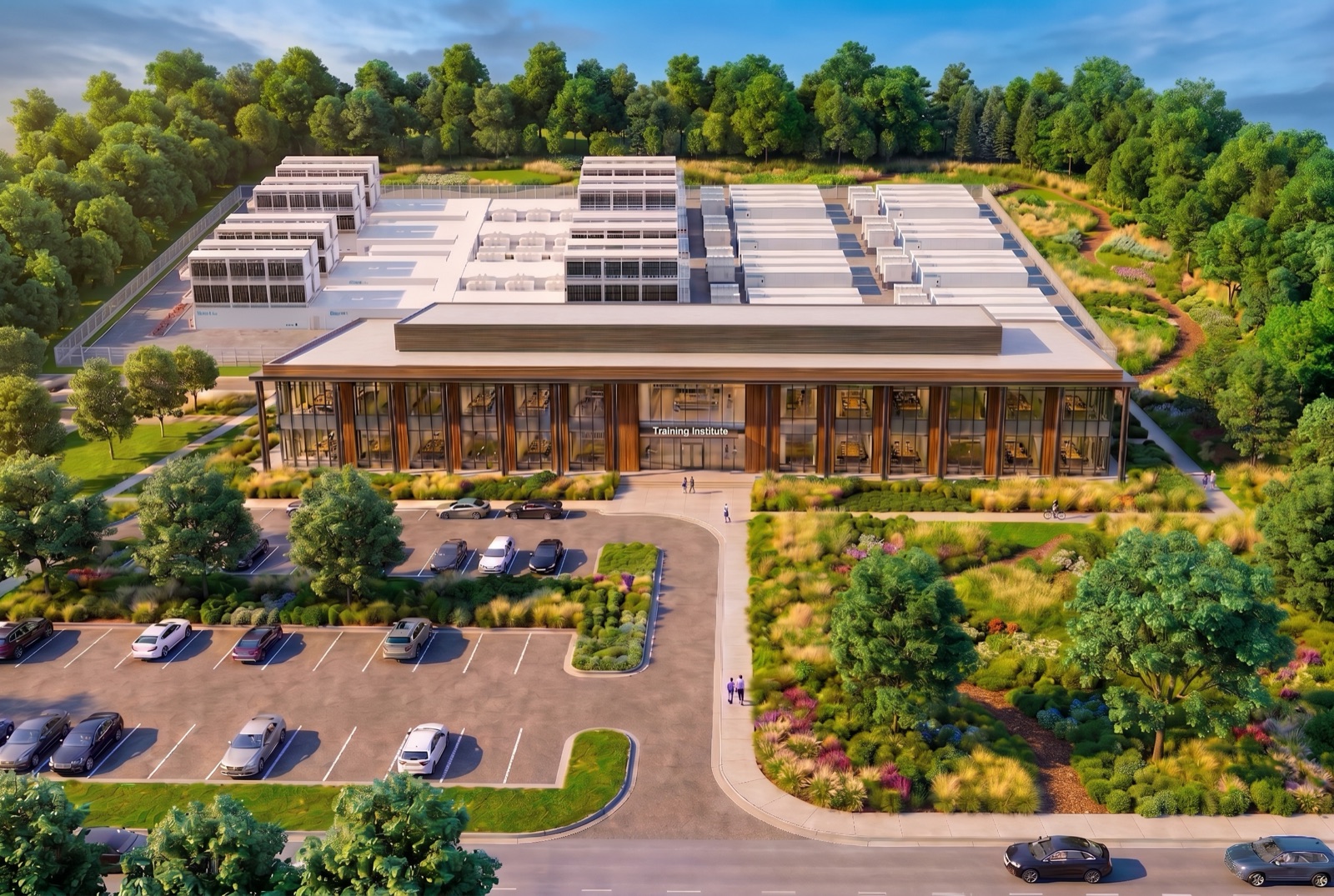
The SAVRN Institute connects technical education with the power, cooling, networks, and compute systems of an AI campus. The people who operate the infrastructure are part of the campus plan from the beginning.
Technical skills. Connected disciplines.
Explore the work, then open the department to see its courses, learning objectives, and progression. Each pathway connects to the same AI campus.
Safety, technical math, workplace documentation, and critical-facility fundamentals provide a shared starting point.
Critical facilities & service delivery
Build the operating discipline behind a reliable facility: shift handovers, preventive maintenance, incident response, and service management.
Low voltage & medium voltage
Study electrical safety, distribution, controls, switchgear, and the on-site generation and storage systems that power an AI campus.
Mechanical systems & heat management
Follow heat from the equipment to the outdoors. Explore HVAC fundamentals, direct-to-chip liquid cooling, heat rejection, and system maintenance.
Fiber, racks & compute systems
Connect structured cabling and network fabrics with server installation, Linux, hardware troubleshooting, and GPU cluster operations.
Protecting people, systems & access
Explore access control, fire detection and suppression, incident procedures, and the separation of operational and IT networks.
From AI literacy to model serving
Progress through AI fundamentals, cluster bring-up, scheduling, and model serving, with a capstone that brings the operating disciplines together.
Learn. Practice. Demonstrate.
The Institute brings education into the infrastructure plan. A local program connects classroom learning, hands-on practice, and evidence of the skills required for the work.
Build the common language of safety, documentation, and system dependencies before moving into a specialist discipline.
Connect course concepts to labs, equipment, operating procedures, and the problems a facilities or compute team must solve.
Use practical assessments and capstone work to show what a learner can do, with a record of the task, conditions, and result.
The catalog shows how courses group into certificates and associate-degree pathways with education partners.
The campus and the community
A training institute is part of SAVRN’s business model alongside the AI factory and community learning center. Education, operating roles, and regional opportunity are planned together.
Connect research infrastructure and technical education. Shape curriculum, labs, and academic pathways around the systems your institution needs to operate.
Explore university AI infrastructureIdentify the roles, equipment, and operating competencies a campus requires. Connect training with maintenance, service delivery, and compute operations.
Discuss workforce requirementsPlan education alongside development, giving local residents a route into technical skills and a public place to learn and use AI.
Explore the Institute campus conceptWorkforce education, built into the project
Bring your institution, location, and workforce needs. We can map the education and operating requirements together.
The public catalog covers a common core and specialist departments in data center operations, networks, hardware, electrical systems, mechanical and thermal systems, security, service delivery, and applied AI. Department pages show the individual courses and learning objectives.
The program model includes entry points for students, skilled tradespeople, incumbent workers, veterans, and career changers. Course prerequisites and the requirements of the local education partner determine an individual's starting point.
The Institute catalog groups courses into certificate and associate-degree pathways. Academic credit, degree awards, accreditation, and industry certifications depend on the responsible educational partners and issuing bodies. The catalog describes the proposed learning structure.
Start with the campus and its workforce needs. SAVRN can discuss the operating roles, relevant departments, lab and equipment requirements, and the education and employer partnerships needed to develop a local program.
This page presents the Institute's workforce training model and public curriculum. Enrollment dates, locations, and entry requirements are specific to each program. Contact SAVRN to discuss current plans and the appropriate education partner.