SAVRN Model Hub
Open-Weight Models
An open-weight model is an AI model whose trained weights are published for anyone to download. The weights are what the model learned in training. With a copy of them you can run the model on hardware you control and train it further on your own data.
Open weights are not the same as open source. Many publishers release the weights without the training data or code, and the license sets what you may do with the model. This library puts each model's full card, architecture, files, license and published evaluations on one page.
Updated 2026-10-19 · How the library is built
11,442 models, sorted by most downloaded.

This model is a fine-tuned version of unsloth/Qwen3-14B-bnb-4bit. It has been trained using TRL. This model was trained with SFT.
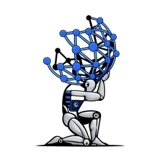
Research checkpoint. Qwen/Qwen3-32B continued-pretrained (full weights, lr 1e-5, 1 epoch, max length 2048, FSDP2 with fp32 master weights) on a constitutional synthetic-document corpus plus chat replay and fineweb-edu replay. - Human audit of a uniform random sample: 4 of 32 flagged; bad-document rate at most 26.4% (95%, Clopper-Pearson) - Built with kiln (run 0930-const-a5bc72)
This repository contains a BatchTopK sparse autoencoder (SAE) trained on the raw residual-stream output of Qwen/Qwen3-32B at model.layers[36] (zero-based, after the 37th transformer block and before the final norm). The checkpoint was trained against Qwen3-32B revision 9216db5781bf21249d130ec9da846c4624c16137. It has 131,072 features, input dimension 5,120, and target average sparsity k=64. - encoder.safetensors: encoder weight and bias. - decoder.safetensors: decoder weight, decoder bias, serving threshold, and k. - loader.py: standalone PyTorch loader with encode and decode methods. - saeconfig.json: model coordinate, architecture, training, and data metadata. - trainingdatamanifest.json…

The full ImmuneCoT method fuses the two safety branches with a Base-adjusted product-of-experts Qimm(v) ∝ q̃rec(v)·q̃res(v)/qB(v). This checkpoint uses the naive fusion Qno-base(v) ∝ q̃rec(v)·q̃res(v) — the same branch weights (λrec=0.5, λres=0.7) but no division by the base distribution — isolating whether the gains come from combining Recognition+Response at all, or specifically from the Base-adjusted PoE term. Intended use: research reproducibility for the ImmuneCoT paper's RQ3 ablation.

模型類型: LoRA Adapter (SFT + ORPO 累積更新) - 基礎模型: unsloth/Qwen3-4B-Base-unsloth-bnb-4bit - SFT 模型來源: tatasauce4life/qwen3-4b-en2zh-lora - 訓練方法: ORPO (Odds Ratio Preference Optimization) 1. SFT 階段: 使用英中平行小說語料做 LoRA SFT 2. ORPO 階段: 使用人工譯文 (chosen) vs. 機器翻譯 (rejected) 做偏好優化 此模型是 LoRA adapter,包含 SFT + ORPO 的累積更新。


The root contains a BF16 Transformers export. originalcheckpoint/ contains the exact native veRL/FSDP checkpoint files and metadata. The local checkpoint is removed only after all remote file sizes and SHA256 hashes are verified.
The root contains a BF16 Transformers export. originalcheckpoint/ contains the exact native veRL/FSDP checkpoint files and metadata. The local checkpoint is removed only after all remote file sizes and SHA256 hashes are verified.
The root contains a BF16 Transformers export. originalcheckpoint/ contains the exact native veRL/FSDP checkpoint files and metadata. The local checkpoint is removed only after all remote file sizes and SHA256 hashes are verified.
The root contains a BF16 Transformers export. originalcheckpoint/ contains the exact native veRL/FSDP checkpoint files and metadata. The local checkpoint is removed only after all remote file sizes and SHA256 hashes are verified.
Model · Text generation
qwen3-4b-rar-medicine-onlinerubrics-dense-seed11-step-003
Run: phase1-online-rubrics-medicine-full-dense-20260919-seed11. The root contains a BF16 model for inference. originalcheckpoint/ contains the original veRL checkpoint files (model parameters only). The local checkpoint remains on disk. Research use only.
Model · Text generation
qwen3-4b-rar-medicine-onlinerubrics-dense-seed11-step-004
Run: phase1-online-rubrics-medicine-full-dense-20260919-seed11. The root contains a BF16 model for inference. originalcheckpoint/ contains the original veRL checkpoint files (model parameters only). The local checkpoint remains on disk. Research use only.
Model Collections
Hand-picked starting points, each with the reason it exists.
Collection · 4 entries
Embedding models for retrieval
Sentence and document embedding models used to build retrieval systems. Dimension and sequence length matter more than size here, and both come from the publisher.
Collection · 4 entries
Models that fit on one accelerator
Models whose publisher-reported parameter count puts them within reach of a single accelerator at common precisions. Memory needed depends on precision and serving configuration, so treat the parameter count as the starting point, not the answer.
Collection · 6 entries
Open-weight text models worth knowing
Widely used open-weight language models, chosen because each one is a distinct family rather than a variant of the one above it. Selection, not a ranking.
Collection · 3 entries
Speech and audio models
Recognition and synthesis models, grouped so the two directions are easy to compare.
Open-Weight Models Explained
What is an open-weight model?
An AI model whose trained weights are published for anyone to download, so it can be run, tested and fine-tuned on hardware the user controls.
Is an open-weight model the same as open source?
Not always. Open weights means the trained model can be downloaded. Open source usually also means the training code and data are available and the license allows broad reuse. Many open-weight models release the weights only.
Can I use an open-weight model commercially?
It depends on the license. Apache 2.0 and MIT allow commercial use. Other licenses limit it, for example to non-commercial use or below a set number of users. Every model page here shows its license.
How much memory does an open-weight model need?
About two bytes per parameter at 16-bit precision, so a 7-billion-parameter model needs roughly 14 GB for its weights, plus memory for the context it processes. Each model page lists its parameter count and the size of its files.
Related SAVRN Research
The hub sits beside SAVRN's market data and infrastructure research: what models cost to run, and what it takes to run them.
SAVRN Index
What open models cost to run
The same open-weight model priced by every host that serves it, per million tokens.
Research Hub
Data center trackers and maps
Moratoriums, permits, power, water and capital behind the facilities that run these models.
Method
How the Model Hub is built
Sources, evidence labels, refresh behaviour, and the limits of every comparison here.