How Many Acres Does a Data Center Need?
Data centers need 10-40 acres for enterprise sites, 100-300 acres for hyperscale campuses, and 875-1,400 acres for the gigawatt AI campuses breaking ground in 2025 and 2026.
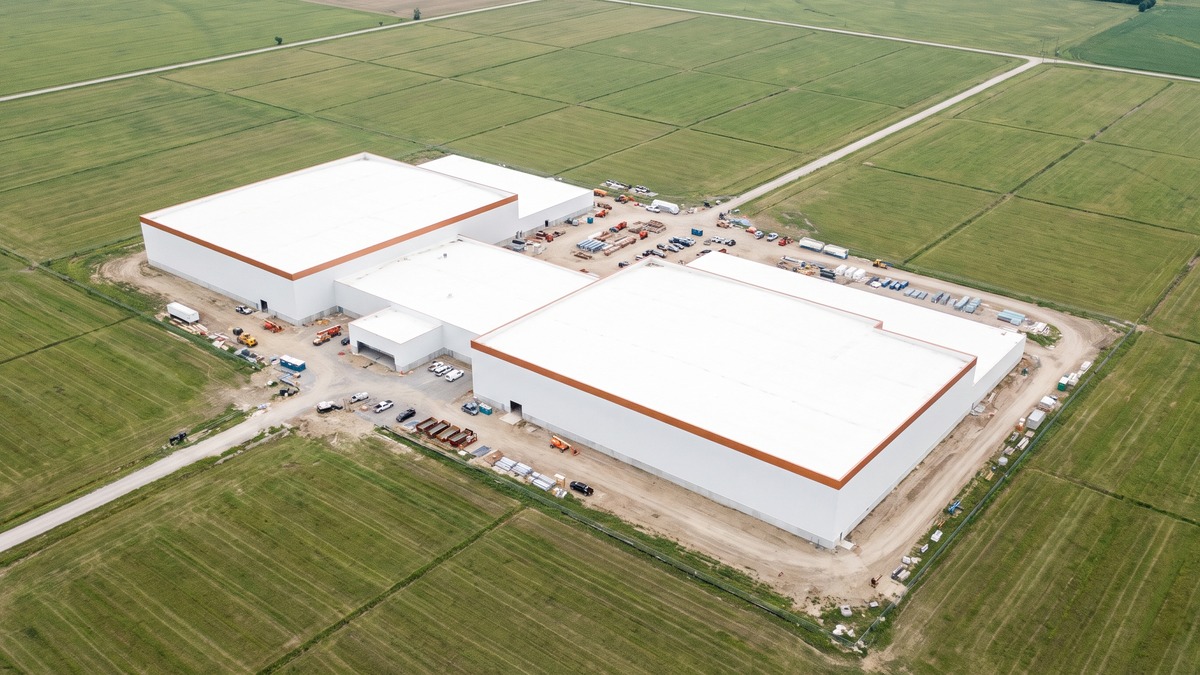
How many acres does a data center need? Roughly 10-40 acres for a 5-20 MW enterprise or colocation facility, 100-300 acres for a 50-100+ MW hyperscale campus, and 875-1,400 acres for the 1-2.5 GW AI campuses that broke ground in 2025 and 2026 ([1]; [2]; [3]). Notably, a 100 MW liquid-cooled AI campus fits on 44-100 acres at the densities in Table 1, or 200-500 acres under the older planning rule of 2-5 acres per MW ([4]; [1]). The question therefore has no single number; it has a density, and the density is set by rack power, cooling type, on-site generation, setbacks, and the substation.
The sections below give the acreage and MW of 17 named campuses with MW per acre computed for each, rule-of-thumb acres per MW by design type, dated land prices per acre, the criteria buyers actually rank, and what a landowner should expect from an option agreement.
How many acres do real data center campuses use?
Table 1 lists announced or built campuses with disclosed acreage and power. Specifically, mW per acre is computed from the two disclosed figures; where a campus includes on-site generation inside the acreage, the note says so. In particular, all figures are as of the source date shown.
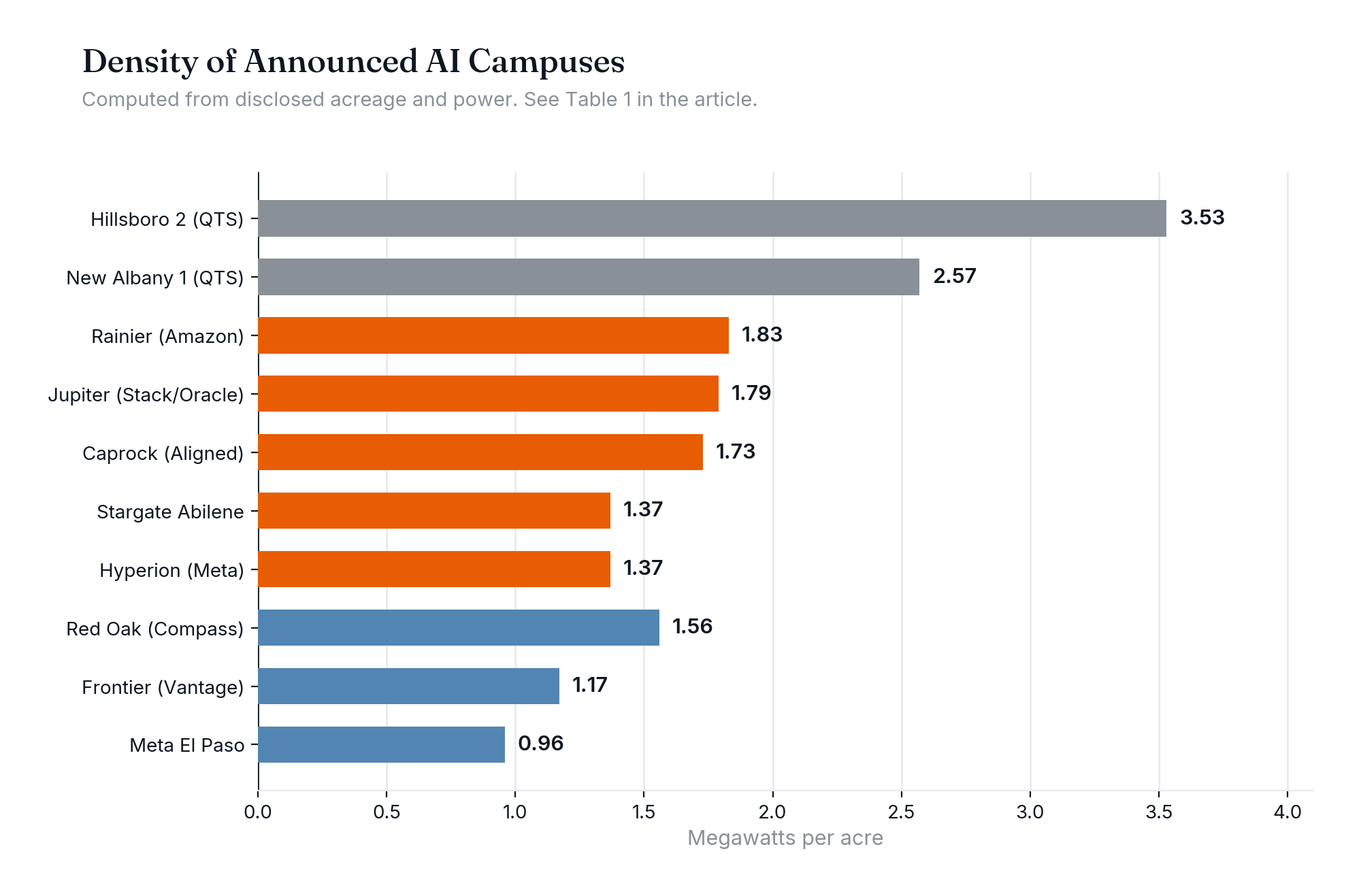
Table 1 Announced and built campuses with disclosed acreage and power
Stargate Site 1, Abilene
TXCrusoe (developer), Oracle tenant for OpenAI
Source [2] Jan 2025 · [5] May 2025
Hyperion, Richland Parish
LAMeta
2,250 acres plus 1,400 acquired late 2025; Raised from 2,000 MW.
Source [6] Feb 2026 · [7] Jul 2026
Project Rainier, New Carlisle
INAmazon Web Services
Source [8] Oct 2025
Fairwater, Mount Pleasant
WIMicrosoft
Power not disclosed.
Source [9] Sep 2025
Frontier, Shackelford County
TXVantage Data Centers
Source [10] · [11] Aug 2025
Project Caprock, Hale County
TXAligned Data Centers
Source [12] Apr 2026
Meta El Paso
TXMeta
Source [13] Apr 2024 · [14] Oct 2025
Red Oak
TXCompass Datacenters
Source [15] Sep 2024
Project Jupiter, Doña Ana County
NMStack Infrastructure / BorderPlex Digital, Oracle tenant
Acreage includes on-site gas, BESS, and desalination.
Source [3] Jul 2026 · [16] Jun 2026
Project Jade, Switchgrass Industrial Park, Cheyenne
WYTallgrass (Crusoe exited Jun 2026)
PUD includes a 1.8 GW power plant.
Source [17] Oct 2025 · [18]
South Valley, Storey County
NVTract
Acreage includes a 525/345 kV substation.
Source [19]
Fleet campus, Storey County
NVFleet Data Centers (on Tract land)
Source [20] 2026
The Citadel, Tahoe Reno
NVSwitch
Master-planned 2017.
Source [21] 2017
Fayetteville
GAQTS
Source [22] 2022
Hillsboro 2
ORQTS
Multistory urban-edge site.
Source [23]
New Albany 1
OHQTS
Source [24]
HyperGrid, Amarillo
TXFermi America
Nuclear, gas, and solar generation, not IT load; Generation density, not IT.
Source [25] Jun 2025
The computed range across the 16 campuses with disclosed power is 0.33-3.53 MW per acre, or 0.28-3.1 acres per MW. For example, the gigawatt-class AI campuses announced in 2025-2026 (Stargate Abilene, Hyperion, Rainier, Frontier, Caprock, Jupiter) cluster tightly at 1.17-1.83 MW per acre, which is 0.55-0.86 acres per MW. The outliers explain the spread: Switch’s Citadel was master-planned in 2017 with 7.2 million sq ft for 650 MW, a legacy density ([21]), while QTS’s Hillsboro 2 is a multistory urban-edge site with no room for expansion or generation ([23]).
Two flagship sites are omitted from the density range on purpose. Microsoft disclosed 315 acres and 1.2 million sq ft for Fairwater but did not publish a MW figure ([26]), and Google bought 1,185 acres in Council Bluffs in 2007 and later added a second 1,000-acre campus with 2.9 million sq ft, without disclosing site power ([27]; [28]). xAI’s Colossus shows the brownfield alternative: the first cluster went into a 785,000 sq ft former Electrolux plant with 150 MW of TVA-approved grid power, later raised to 250 MW ([29])), and Colossus 2 added a 1 million sq ft warehouse plus adjacent parcels totaling about 100 acres ([30]).
How many acres per MW by design type
Acreage per MW is a function of building density, cooling, and what else sits inside the fence. Importantly, table 2 assembles published rules of thumb and measured footprints for each component. As a result, multiply the components that apply to a given site; do not use a single number.
Table 2 Acres per MW by design element
Worked example: 100 MW with and without on-site generation
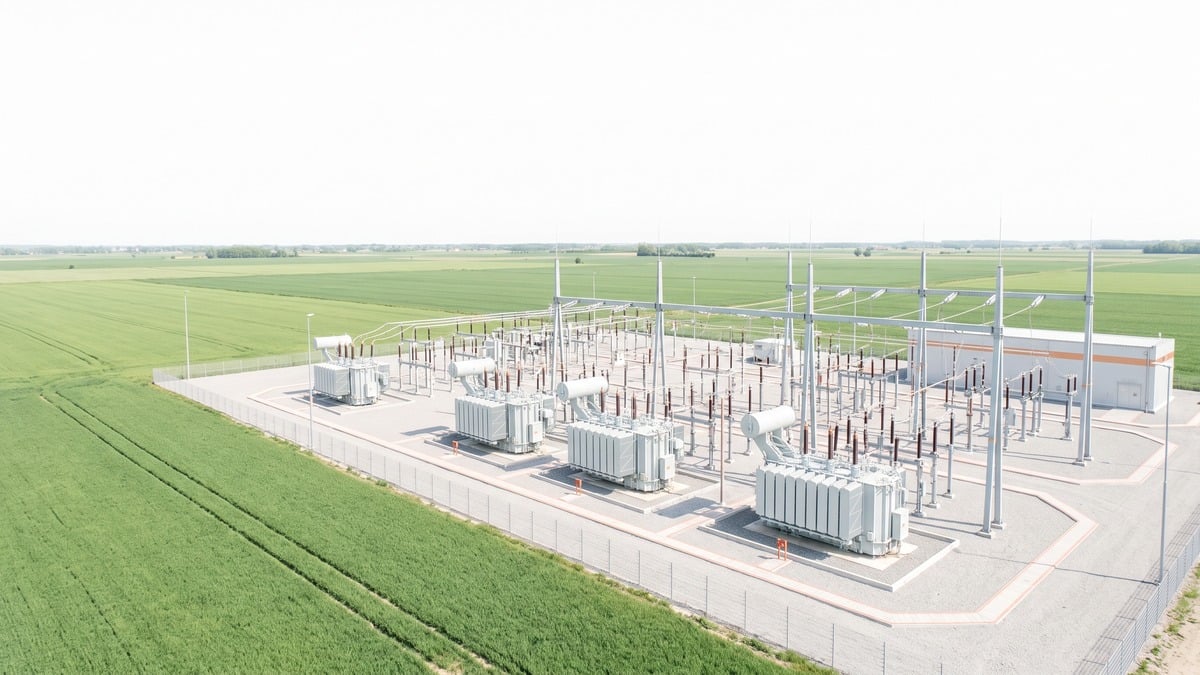
Using the Table 2 components, a 100 MW liquid-cooled campus at the 2025-2026 observed density needs 55-86 acres of buildings, yards, and cooling plant. By contrast, a Langan-scale substation adds roughly 17 acres per 100 MW ([38]). In addition, bridging or primary gas turbines add about 20 acres per 100 MW ([32]), which is why Stargate Abilene planned 360 MW of on-site turbines inside its 875 acres ([5]) and Meta is deploying 366 MW of modular gas units at El Paso ([42]).
Solar changes the order of magnitude. U.S. For instance, utility-scale PV ran at a 23.2% annual capacity factor in 2024 ([43]), so supplying 100 MW of continuous load on an annual energy basis requires about 431 MWac of nameplate, before storage losses. Similarly, at NREL’s 5-7 acres per MWac ([33]), that is roughly 2,150-3,000 acres of panels, a 25-35x multiplier on the data center’s own footprint. This is why Microsoft’s Fairwater solar sits 100+ miles away in Portage County rather than on the 315-acre campus ([26]), and why on-site solar on a data center campus is a supplement, not a supply.
Setbacks can consume most of a small parcel
Setbacks are the reason small parcels fail. Notably, a 40-acre square parcel has sides of 1,320 ft; applying Spotsylvania’s 400 ft residential setback on all four sides leaves a 520 ft by 520 ft building envelope of 6.2 acres, 16% of the parcel ([39]). Specifically, james City County’s 1,000 ft separation from dwellings ([40]) eliminates that parcel entirely if any house sits within 1,000 ft of the property line. Cushman & Wakefield’s data shows the market responding: the average data center land transaction reached 224 acres in 2024, up 144% since 2022, with 190 acres in established markets and 340 acres in emerging ones ([44]).
How do data centers choose land?
Buyers rank power first and everything else second. In particular, enverus summarizes the hierarchy as “power, price, land,” notes that hyperscale facilities now need 100+ MW, and puts electricity at 25-60% of operating cost ([45]). For example, cBRE’s 2026 site-selection framework leads with power availability and scalability, then power cost, connectivity and latency, site availability and planning certainty, clustering, and sustainability ([46]). Importantly, a civil engineering firm’s weighted scorecard gives power 25%, fiber 20%, water 15%, land size and geotechnical 15%, natural hazard risk 10%, zoning 10%, and tax incentives 5% ([47]).
Power availability and interconnection timeline
The interconnection timeline dominates because it is the only variable a developer cannot buy. Data centers are built in 18-24 months, while new high-voltage transmission takes 7-10 years and generation projects wait 4-5 years in interconnection queues ([48]). As a result, the same analysis cites 55 months from interconnection request to commercial operation for generation reaching service in 2024 ([48]). By contrast, a parcel with an executed large-load study and a substation path is a different asset from a parcel that merely sits under a transmission line. In addition, land counsel put it directly: a 40-acre tract with a realistic large-load power path is worth more than 100 acres without one ([49]).
Fiber, water, zoning, geotechnical, and hazards
JLL’s screening guidance calls for three to four redundant fiber providers and frames the modern demand curve as 100 MW or more for new developments, 200-300 MW in outer-suburban locations, and 500 MW to 1 GW for rural AI campuses that “require 500-800 acres” and multiple substations ([50]). Ramboll’s criteria add that hyperscale cloud sites typically exceed 100 MW while AI sites may require 200 MW or more, with some clients seeking 600 MW ([51]). For instance, wetlands, endangered species, floodplain, soils, and stormwater come next as physical feasibility screens, followed by road access, drainage, water, wastewater, and fiber ([49]). Similarly, a detailed diligence sequence is covered in data center site selection due diligence.
Zoning determines the calendar. Land already zoned heavy industrial can close in months, while agricultural or general commercial land needs a rezoning or conditional-use process that adds six months to well over a year, longer if a public hearing draws opposition ([52]). Community posture is now a measurable variable: at least 75 projects worth about $130 billion were blocked or delayed in the first quarter of 2026 alone ([53]), after $152 billion was blocked or delayed across 2025 ([54]). The U.S. Notably, data Center Moratorium Tracker logs which jurisdictions have active moratoria or restrictive ordinances.
What is data center land cost per acre?
Land is a small share of total project cost but the most variable line item. Specifically, the weighted average U.S. In particular, data center land price through October 2024 was $5.59 per sq ft, or about $244,000 per acre, down $39,000 per acre year over year as buyers moved to larger, cheaper rural parcels; parcels of 50 acres or more rose 23% to $5.40 per sq ft over the same period ([44]). For example, table 3 lists dated transactions and market ranges.
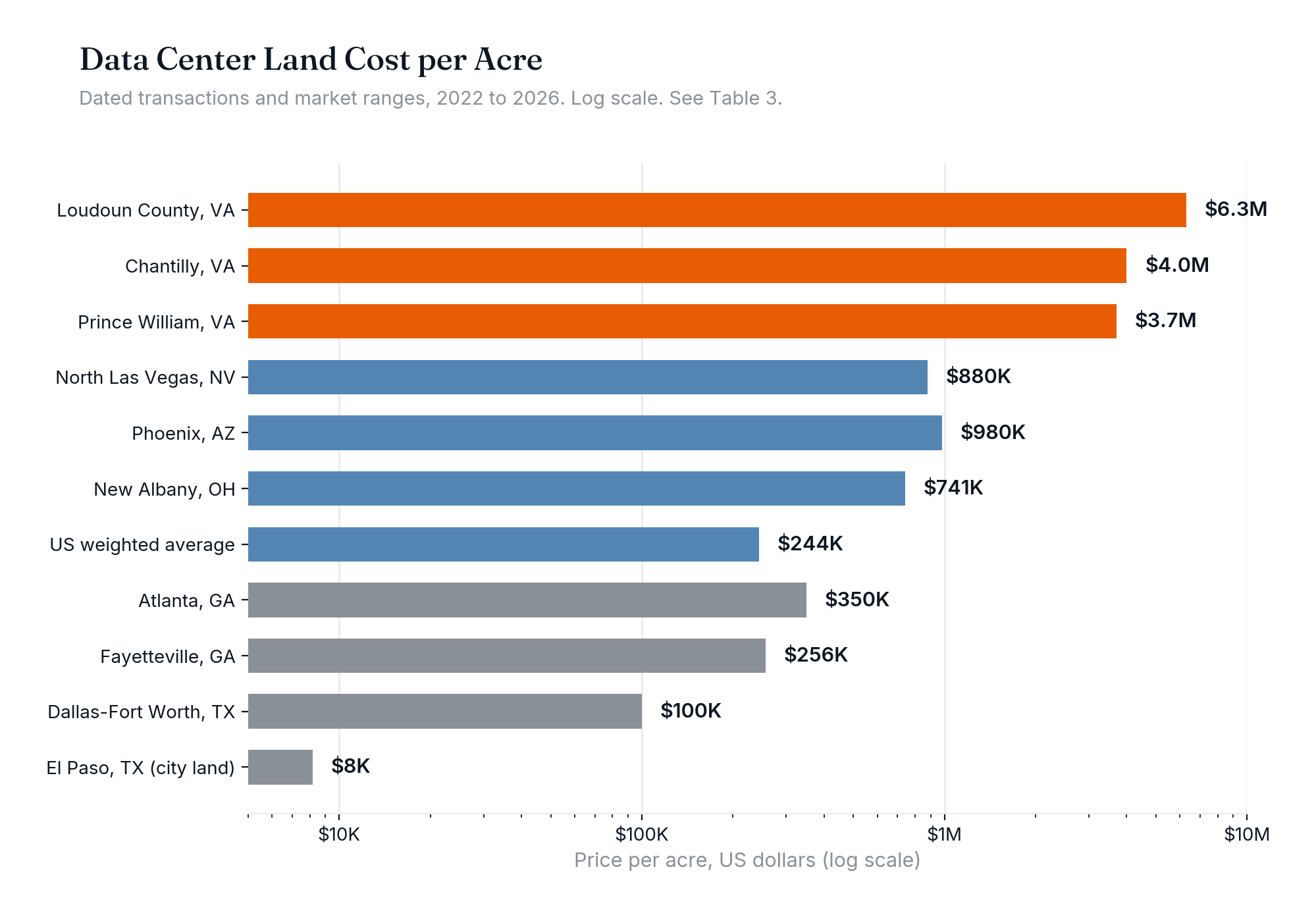
Table 3 Data center land cost per acre by market
The spread is three orders of magnitude: $8,156 per acre for Meta’s El Paso parcel versus roughly $6.3 million per acre in Loudoun County. Importantly, the Cushman & Wakefield series shows the same pattern nationally, with the Chicago median at 13 times Iowa’s ([44]). Because land in Northern Virginia trades at 25-50 times the national average, the gigawatt campuses of 2025-2026 went to Abilene, Richland Parish, New Carlisle, Shackelford County, and Doña Ana County, where 1,000+ acre assemblages were possible.
How to sell your land to a data center
Developers screen parcels in a fixed order, and a landowner who understands the order negotiates better. Land counsel ranks the drivers as: power path first, entitlement posture second, physical feasibility third (wetlands, species, floodplain, soils, stormwater), infrastructure fourth (access, drainage, water, wastewater, fiber), then parcel logic and “dealability” ([49]). As a result, broker screens are the same: proximity to a transmission substation, industrial or flexible zoning, contiguous acreage of 20+ acres (100+ for hyperscale), flat ground outside the flood zone, and a utility able to serve ([52]).
The option agreement
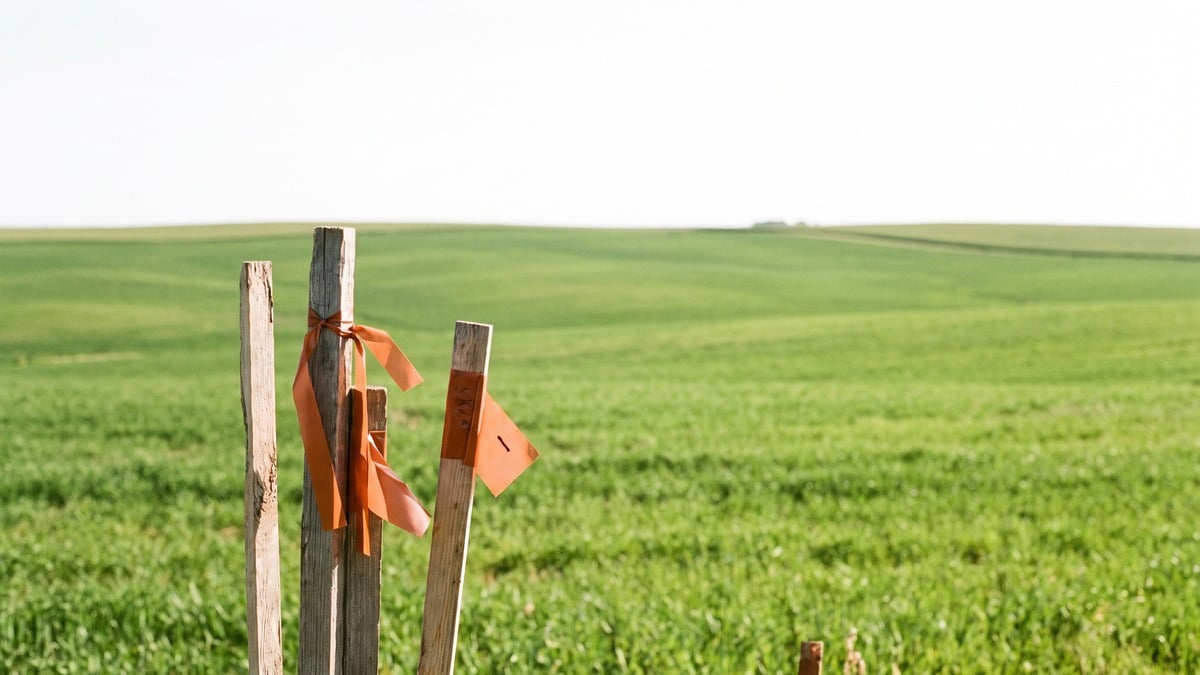
Nearly every data center land deal starts as an option, not a sale. By contrast, developers typically ask for twelve months and broad termination rights; the negotiable terms are a refundable initial period, paid extensions, milestone triggers, staged deposits that harden over time, option fees, and escalating purchase prices ([49]). In addition, agricultural law counsel report that site consultants ask for a non-disclosure agreement immediately and then a three-year purchase option with unrestricted access for soil borings and environmental testing ([58]). For instance, option agreements routinely run 20 or more pages and the diligence waiting period can stretch to years ([59]).
The Meta El Paso transaction shows the structure at hyperscale: a year-long inspection period with extensions beginning April 2022, closing in December 2023, a price set by an independent CBRE appraisal, and a five-year deadline to develop the site ([13]). Similarly, buyers use that period for title and survey, Phase I environmental, geotechnical borings, a utility power study, wetlands and floodplain delineation, and zoning review ([60]).
Red flags for landowners
Three patterns separate real buyers from land speculators. First, an option with no fee, no milestones, and unlimited free extensions transfers all timing risk to the seller ([49]). Second, unrestricted testing access without a restoration and indemnity clause leaves the owner with open bore holes and crop damage if the deal dies ([58]). Third, a buyer who cannot describe the power path is usually optioning land to flip to someone who can; the executed utility study, not the letter of intent, is the evidence that a buyer is real ([49]).
How many acres does an AI data center need, and why is the math different?
AI changes the acreage math in two opposite directions: buildings get denser, and campuses get bigger. Notably, Uptime Institute’s 2024 survey put average rack density below 8 kW, with most facilities reporting no racks above 30 kW ([61]), and its 2025 survey shows densities rising slowly through growth in the 10-30 kW range ([62]). Specifically, a single NVIDIA GB200 NVL72 rack draws 120 kW ([63]), and AI campuses are planned at 50-100+ kW per rack and 300-1,000+ MW per campus ([1]).
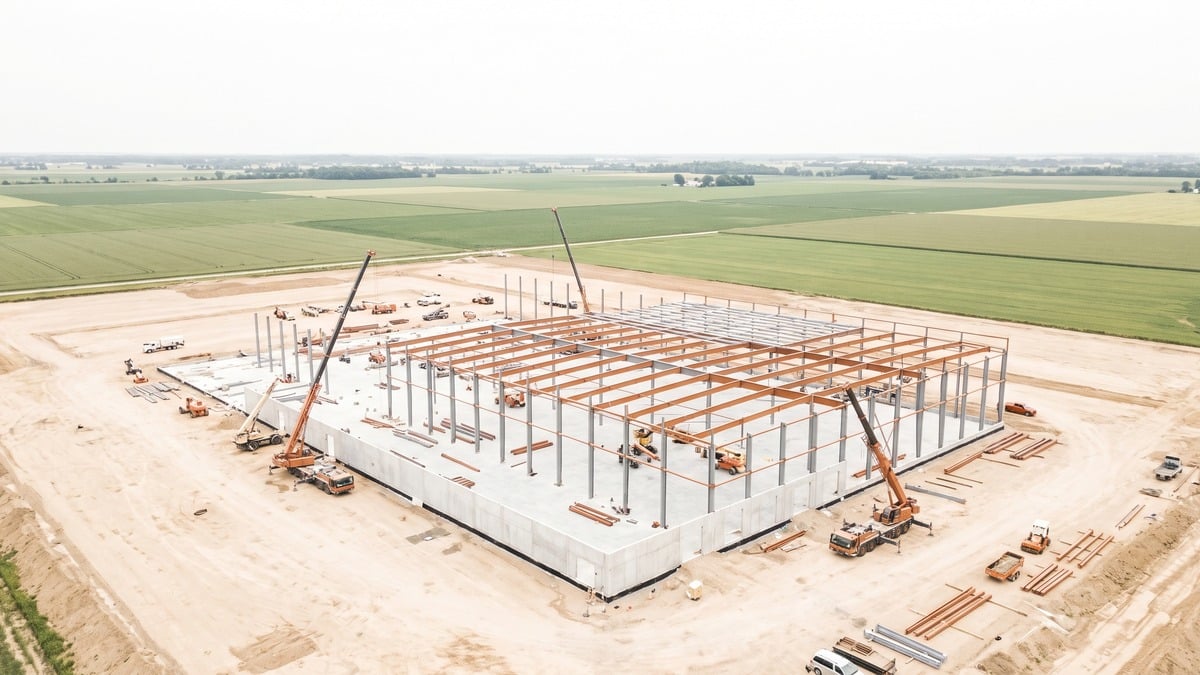
Denser racks mean fewer square feet per MW. In particular, a 2018 Tier III design study in Ashburn used 200 W per sq ft as its baseline ([64]). The liquid-cooled campuses in Table 1 run higher: Vantage Frontier’s 3.7 million sq ft for 1,400 MW is about 378 W per sq ft ([10]), Aligned Caprock’s 1.65 million sq ft for 540 MW is about 327 W per sq ft ([12]), and Stargate Abilene’s roughly 4 million sq ft for 1,200 MW is about 300 W per sq ft ([2]). For example, switch’s Citadel plan of 7.2 million sq ft for 650 MW, about 90 W per sq ft, marks the legacy end ([21]). Importantly, cooling design drives this; see liquid cooling for AI.
The campus still grows because the power system moves on site. As a result, stargate’s 875 acres carry 360 MW of gas turbines ([5]); Project Jupiter’s 1,400 acres carry gas plants, batteries, and a desalination plant ([3]); Project Jade’s 1,375-acre PUD was written to allow a 1.8 GW power plant alongside the data centers ([17]). By contrast, fermi America’s 5,800 acres are sized for 11 GW of nuclear, gas, and solar generation feeding 18 million sq ft of data centers ([25]). In addition, the behind-the-meter tradeoffs are covered in behind-the-meter AI power.
How moratoria and zoning reshape parcel selection
Local ordinances now set the effective acreage as much as engineering does. For instance, spotsylvania’s December 2025 standards impose a 300 ft vegetated buffer, a 400 ft setback from residences, and a 75 ft height cap ([39]); Albemarle County has proposed 200 ft and 500 ft setbacks ([65]); James City County requires 1,000 ft from dwellings ([40]). Similarly, each of these rules pushes developers toward larger parcels with interior building envelopes, or toward jurisdictions without them.
The result is the geography visible in Table 1: gigawatt campuses on 875-5,800 acres in Texas, Louisiana, Indiana, New Mexico, Nevada, and Wyoming, while Northern Virginia deals shrink to 42-189 acres at $3.5-6.3 million per acre ([55]). Notably, before optioning any parcel, check the jurisdiction against the Data Center Moratorium Tracker and the general data center land requirements checklist.
How SAVRN builds for this
SAVRN’s AI factory design treats acreage as an output of power and cooling decisions rather than an input. The compute block, the Atom, is factory-built and liquid-cooled, which places it at the dense end of the Table 1 range rather than the 2-5 acres per MW planning rule. The power system, the Electron family, is behind-the-meter generation sized to the compute block, which removes the 7-10 year transmission timeline from the critical path ([48]) and adds a known generation footprint instead of an unknown interconnection date. Specifically, the design is water-free, which eliminates the water-rights and wastewater screens that eliminate many rural parcels.
Because hosts are universities, cities, and communities, parcel selection starts from land the host already controls, often industrial or institutional acreage with existing zoning, rather than from agricultural land that needs a rezoning. In particular, the self-powered AI data center page describes the block-level power architecture, behind-the-meter AI power covers the generation tradeoffs, and the Data Center Moratorium Tracker is maintained as a public screen for jurisdictional risk. For example, the site selection due diligence article lists the studies SAVRN runs before a site is committed.
Chad Harris, Founder, SAVRN
Frequently asked questions
How many acres does a data center need?
A 5-20 MW enterprise or colocation data center needs about 10-40 acres, and a 50-100+ MW hyperscale campus needs 100-300 acres ([1]). Gigawatt AI campuses announced in 2025-2026 used 875-1,400 acres ([2]; [3]). Importantly, density, not a fixed acreage, is the real answer.
How many acres does an AI data center need?
AI campuses run 1.17-1.83 MW per acre, or 0.55-0.86 acres per MW, based on Stargate Abilene, Meta Hyperion, Amazon Rainier, Vantage Frontier, Aligned Caprock, and Project Jupiter (Table 1). A 100 MW AI campus therefore needs 55-86 acres of built area, plus roughly 17 acres for a substation ([38]) and about 20 acres per 100 MW of on-site gas turbines ([32]).
How much land is needed for a data center with on-site solar?
Utility-scale solar needs 5-7 acres per MWac of nameplate ([33]) and ran at a 23.2% capacity factor in 2024 ([43]). As a result, supplying 100 MW of continuous load on an annual basis needs about 431 MWac, or roughly 2,150-3,000 acres of panels, 25-35 times the data center footprint. By contrast, batteries add about 0.1 acre per MW ([36]).
How do data centers choose land?
Power availability and interconnection timeline rank first, then fiber, water, zoning and entitlement certainty, geotechnical and hazard risk, and tax incentives ([46]; [47]). Data centers take 18-24 months to build while new transmission takes 7-10 years ([48]), so a parcel with a documented power path outranks a larger parcel without one.
What is data center land cost per acre?
The U.S. In addition, weighted average was about $244,000 per acre through October 2024 ([44]). For instance, northern Virginia deals in 2024-2026 closed at roughly $3.5-6.3 million per acre ([55]), Dallas-Fort Worth land was quoted at $50,000-150,000 per acre in September 2025 ([56]), and Meta paid $8,156 per acre for city-owned land in El Paso ([13]).
How to sell your land to a data center?
Expect an NDA, then an option agreement rather than an outright sale: developers commonly ask for twelve months or more with broad termination rights and access for soil borings and environmental testing ([49]; [58]). Similarly, negotiate option fees, paid extensions, milestone triggers, and hardening deposits, and require the buyer to show a utility power study.
How many acres are needed to build a data center in a county with setbacks?
Setbacks decide buildable area. Notably, spotsylvania County requires a 300 ft vegetated buffer and 400 ft from residences ([39]); on a square 40-acre parcel a 400 ft setback on all sides leaves about 6.2 buildable acres. Specifically, james City County’s 1,000 ft rule ([40]) makes small parcels near housing unusable.
What land and grid access requirements make or break AI factory site selection?
Grid access is the binding constraint: 55 months from interconnection request to operation for 2024 generation, and 7-10 years for new transmission, against 18-24 months to build the facility ([48]). In particular, on land, buyers need contiguous acreage of 100+ acres for hyperscale, industrial zoning, flat ground outside the floodplain, and a utility able to serve ([52]); moratoria blocked or delayed about $130 billion of projects in Q1 2026 ([53]).
What is an option agreement and how long do they typically run?
An option agreement gives a developer the exclusive right to buy a parcel within a set period, and it is how nearly every data center land deal starts, not as an outright sale. For example, developers typically ask for twelve months with broad termination rights, and the negotiable terms are a refundable initial period, paid extensions, milestone triggers, staged deposits that harden over time, option fees, and escalating purchase prices ([49]). Agricultural land deals can run longer: site consultants have asked for a three-year purchase option with unrestricted access for soil borings and environmental testing ([58]), and because the documents routinely run 20 or more pages, the diligence waiting period can stretch to years ([59]).
How much does data center land cost in Northern Virginia versus Texas?
Northern Virginia is the most expensive market by a wide margin: Loudoun County traded at roughly $6.3 million per acre, Prince William County at roughly $3.7-3.75 million per acre, and Chantilly at roughly $4 million per acre in deals from 2024 through 2026 ([55]). Texas is at the other end of the range: the US-67 corridor ran $20,000-40,000 per acre before the AI boom and has since risen to $350,000 or more in hot spots, while Dallas-Fort Worth land is quoted broker-to-broker at $50,000-150,000 per acre ([55]; [56]). Because Northern Virginia land trades at 25-50 times the national average, the gigawatt-scale campuses of 2025-2026 instead went to Texas, Louisiana, Indiana, New Mexico, and Wyoming, where 1,000-plus acre assemblages were still affordable.
What red flags should a landowner watch for when a developer offers a land option?
Three patterns separate a real buyer from a speculator. First, an option with no fee, no milestones, and unlimited free extensions shifts all of the timing risk onto the seller ([49]). Second, unrestricted testing access without a restoration and indemnity clause can leave the owner with open bore holes and crop damage if the deal falls through ([58]). Third, a buyer who cannot describe the power path is usually optioning the land to flip it to someone who can, since an executed utility study, not a letter of intent, is the real evidence of a serious buyer ([49]).
How does rack density affect how many acres an AI campus needs?
Rack density works in two directions at once: denser racks shrink the building footprint per MW, but the power system that supports them still needs land. Importantly, Uptime Institute’s 2024 survey put average rack density below 8 kW, yet a single NVIDIA GB200 NVL72 rack draws 120 kW, and AI campuses are now planned at 50-100-plus kW per rack ([61]; [63]). As a result, liquid-cooled campuses like Vantage Frontier run about 378 watts per square foot, versus roughly 90 watts per square foot at Switch’s legacy Citadel design ([10]; [21]). Even so, the campus footprint grows rather than shrinks in practice, because the higher power draw is typically met with on-site gas turbines, batteries, or a larger substation added inside the same fence line.
Sources
- Western States Water Council, WestFAST presentation on data centers and water, May 7, 2026.
- CoStar, “Nation’s first Stargate data center in West Texas is already in expansion mode,” Jan 29, 2025.
- Data Center Dynamics, “Oracle revealed as tenant of Project Jupiter data center campus in New Mexico,” Jul 2026.
- QTS, Hillsboro 3 data center.
- R&D World, “Stargate’s $500B bet could force data center and 1.2 GW grid rethink,” May 2025.
- Fortune, “Meta Hyperion AI data center Louisiana expansion,” Feb 4, 2026.
- Data Center Dynamics, “Meta expands data center campus in Richland Parish, Louisiana, to 5GW,” Jul 2026.
- CNBC, “Amazon opens $11 billion AI data center Project Rainier in Indiana,” Oct 29, 2025.
- Tom’s Hardware, “Microsoft announces world’s most powerful AI data center, 315-acre site,” Sep 18, 2025.
- Vantage Data Centers, Frontier campus, Shackelford County, TX.
- Reuters, “Vantage Data Centers plans $25 billion AI campus in Texas,” Aug 19, 2025.
- Aligned Data Centers, “Aligned breaks ground on Project Caprock,” Apr 9, 2026.
- El Paso Times, “Facebook parent Meta buys land in El Paso for proposed data center,” Apr 9, 2024.
- Data Center Dynamics, “Meta breaks ground on 1GW data center campus in El Paso, Texas,” Oct 2025.
- Data Center Dynamics, “Compass Datacenters looks to expand Red Oak campus,” Sep 2024.
- NPR, “Worries over water as a giant data center moves into the New Mexico desert,” Jun 12, 2026.
- Laramie County, WY, zone change for 1,375-acre Switchgrass Industrial Park (Citizen Portal record), Oct 6, 2025.
- Data Center Dynamics, “Crusoe gets go-ahead for 1.8GW data center campus and power plant in Cheyenne, Wyoming.”
- Tract, South Valley project, Storey County, NV.
- Data Center Dynamics, “Fleet breaks ground on data center outside Reno, Nevada,” 2026.
- Data Center Dynamics, “Switch opens Tahoe Reno 1, world’s largest colo data center,” 2017.
- Data Center Dynamics, “QTS confirmed as behind 250MW data center mega project in Fayetteville, Georgia,” 2022.
- QTS, Hillsboro 2 data center.
- Data Center Dynamics, “QTS plans four-building data center campus in New Albany, Ohio.”
- Fermi America, “Fermi America unveils plan for largest U.S. energy and data complex,” Jun 2025.
- Microsoft, “Made in Wisconsin: the world’s most powerful AI datacenter,” Sep 18, 2025.
- Data Center Knowledge, “Google confirms data center in Council Bluffs, Iowa,” Jun 2007.
- Business Record, “Growth of data centers in Iowa,” Apr 2025.
- [Wikipedia, “Colossus (supercomputer),” summarizing TVA and Memphis records.](https://en.wikipedia.org/wiki/Colossus_(supercomputer)
- SemiAnalysis, “xAI’s Colossus 2: first gigawatt datacenter,” Sep 2025.
- Data Center Dynamics, opinion, “Could you build a data center there?”
- Thunder Said Energy, “Is there enough land for an energy transition?”
- NREL, land-use planning guidance for solar, 2018.
- NREL, “Land-Use Requirements for Solar Power Plants in the United States,” NREL/TP-6A20-56290, 2013.
- METIS Power, “Data Center Series: BTM Footprint,” 2025.
- Irby Construction, “Manatee Battery Energy Storage Center 75% complete,” Aug 16, 2021.
- Florida Power & Light, Manatee Energy Storage Center.
- Langan, hyperscale data center campus portfolio entry.
- Spotsylvania County, VA, Ordinance 23-190 data center design standards (Citizen Portal record), Dec 9, 2025.
- James City County, VA, adopted resolution on data center facilities, Nov 12, 2025.
- RSP Engineers, “Data center stormwater design: civil engineering best practices,” Jul 28, 2026.
- Data Center Dynamics, “Meta to deploy 366MW of modular gas units to power 1GW data center in El Paso.”
- EIA, Electric Power Annual Table 4.08.B, capacity factors for utility-scale non-fossil generators (2014-2024).
- Cushman & Wakefield, Data Center Development Cost Guide 2025, Dec 2024.
- Enverus, “Data center site selection criteria.”
- CBRE, “Key factors to consider for effective data centre site selection,” Feb 19, 2026.
- RSP Engineers, “Top site selection criteria for data centers,” Jul 12, 2026.
- Belfer Center, Harvard Kennedy School, “Data centers: Texas-Virginia comparison,” Apr 20, 2026.
- Lowndes, “Beyond price per acre: a landowner’s guide to maximizing value in a data center site sale,” Mar 16, 2026.
- JLL, “How to assess a property’s data center potential,” Nov 5, 2024.
- Ramboll, “Data center site selection: criteria for successful development,” Dec 9, 2025.
- PowerReadySites, “Selling land to data center developers,” updated Aug 7, 2026.
- Data Center Watch, Q1 2026 report.
- Data Center Watch, Q3-Q4 2025 report.
- NAHB, “Servers over shelter: AI data centers outbidding home builders for land,” Jul 30, 2026.
- Datacenters.com, “Top 5 U.S. markets where data center land is heating up in 2025,” Sep 15, 2025.
- Data Center Dynamics, “Google acquires 85 acres in New Albany, Ohio,” 2025.
- RFD-TV, Firm to Farm, “Legal and property rights issues associated with data centers,” Jul 2, 2026.
- MPL Law, “Data center developers are knocking: are you ready?” May 6, 2026.
- PowerReadySites, “Data center land due diligence checklist.”
- Uptime Institute, 14th annual global data center survey press release, Jul 30, 2024.
- Uptime Institute, 2025 Annual Survey Report.
- The Register, “A closer look at Nvidia’s 120kW DGX GB200 NVL72 rack system,” Mar 21, 2024.
- Data Center Frontier, “Vertical data centers: ‘watts per acre’ guides construction economics,” 2018.
- Albemarle County, VA, data center regulations engagement page.
Want the next one?
When a new piece publishes on SAVRN Insights, you get one email with what it covers and a link to read it. Choose the research that interests you.
Also send me
Receive a short introduction on days 3, 7 and 14, plus the updates you select. Unsubscribe in one click. Privacy
How Many Acres Does a Data Center Need?
Get new SAVRN Insights by email
A short introduction on days 3, 7 and 14, plus new SAVRN research articles. Unsubscribe at any time.
We use your address to send the introduction and updates described above. See our Privacy Policy.