SAVRN Model Hub
Open-Weight Models
An open-weight model is an AI model whose trained weights are published for anyone to download. The weights are what the model learned in training. With a copy of them you can run the model on hardware you control and train it further on your own data.
Open weights are not the same as open source. Many publishers release the weights without the training data or code, and the license sets what you may do with the model. This library puts each model's full card, architecture, files, license and published evaluations on one page.
12,010Models
3,413Datasets
288Papers
7,298Publishers
12,421Sourced relationships
Updated 2026-10-21 · How the library is built
12,010 models, sorted by most downloaded.

ChatNusa adalah Large Language Model (LLM) percakapan cerdas yang diadaptasi khusus untuk bahasa-bahasa daerah di Provinsi Nusa Tenggara Barat (Bahasa Sasak, Bahasa Samawa / Sumbawa, Bahasa Mbojo / Bima & Dompu) serta Bahasa Indonesia. Model ini dikembangkan oleh kodetr sebagai bagian dari ekosistem riset NusaNLP untuk melestarikan dan mendemokratisasi teknologi AI bagi bahasa-bahasa daerah berdaya rendah (low-resource regional languages). - Bahasa Sasak (sas) — Lombok (~3 juta penutur) - Bahasa Samawa (smw) — Sumbawa & Sumbawa Barat (~500 ribu penutur) - Bahasa Mbojo (bjn / Bima) — Bima & Dompu (~600 ribu penutur) - Bahasa Indonesia (id) 1. Definisi & Leksikon Kamus Terpadu: - Memahami…

This model was finetuned and converted to GGUF format using Unsloth. - Qwen2.5-3B-Instruct.Q4KM.gguf ChatNusa adalah Large Language Model (LLM) percakapan cerdas yang diadaptasi khusus untuk bahasa-bahasa daerah di Provinsi Nusa Tenggara Barat (Bahasa Sasak, Bahasa Samawa / Sumbawa, Bahasa Mbojo / Bima & Dompu) serta Bahasa Indonesia. Model ini dikembangkan oleh kodetr sebagai bagian dari ekosistem riset NusaNLP untuk melestarikan dan mendemokratisasi teknologi AI bagi bahasa-bahasa daerah berdaya rendah (low-resource regional languages). - Bahasa Sasak (sas) — Lombok (~3 juta penutur) - Bahasa Samawa (smw) — Sumbawa & Sumbawa Barat (~500 ribu penutur) - Bahasa Mbojo (bjn / Bima) — Bima &…

This qwen35 model was trained 2x faster with Unsloth and Huggingface's TRL library.
English Chatterbox Nano conversion for OpenReader and Apple's Core AI runtime. Official weights revision 71ccd1d0081b430592cea481f4307e764e07bc64; Chatterbox source revision 5de7a54aa4e5e2baadb0182dde554908b48b85c2 (nano=True loader). The official default voice, tokenizer, MIT notice and Perth watermark are included. No personal recordings are included. T3 has twelve layers, hidden width 768 and twelve attention heads. Projections, host embeddings, K/V storage and decode attention use FP16. Normalization, residuals, prefill attention and output logits use FP32. There is no per-token palette expansion. Ordinary cache inputs/outputs avoid the large attention errors observed with Core AI…

First-party Nile Academy conversion of the official English Original checkpoint at 5bb1f6ee58e50c3b8d408bc82a6d3740c2db6e18. This is a derivative ONNX artifact, not an ONNX release published by Resemble AI. The independent conversion uses publisher source at 5de7a54aa4e5e2baadb0182dde554908b48b85c2 and safetensors only. No community exporter or community checkpoint is included. The native adapter supports reference cloning, emotion exaggeration, classifier-free guidance and temperature. The official ten-step flow decoder is preserved; Turbo's one-step decoder is not substituted. Publisher defaults are exaggeration 0.5, guidance 0.5 and temperature 0.8. For a fast reference, guidance near…

This is a research-stage audio-to-audio voice-conversion adapter, not a standalone TTS model. It changes Chatterbox's S3Gen acoustic decoder while keeping the S3 semantic tokenizer, CAMPPlus speaker encoder and HiFT vocoder frozen. The adapter is rank 128 on 224 q/k/v/out attention projections, with the previously trained 99-score conditioning projector. Download the pinned upstream Chatterbox S3Gen and the 300-hour supervised/v1 RL parent release separately. This repository does not contain the upstream base weights or the training audio. The completed v1 continue rank-128 adapter at step 4,000 is continued without merging it into the base. The reward uses the frozen model at revision…
This is a research-stage audio-to-audio voice-conversion adapter, not a standalone TTS model. It changes Chatterbox's S3Gen acoustic decoder while keeping the S3 semantic tokenizer, CAMPPlus speaker encoder and HiFT vocoder frozen. The adapter is rank 128 on 224 q/k/v/out attention projections, with the previously trained 99-score conditioning projector. Download the pinned upstream Chatterbox S3Gen and the 300-hour supervised/v1 RL parent release separately. This repository does not contain the upstream base weights or the training audio. The completed v1 mergednew step-4,000 adapter is merged into its effective base and a new rank-128 adapter is initialized for this follow-up. The reward…
This is a research-stage audio-to-audio voice-conversion adapter, not a standalone TTS model. It changes Chatterbox's S3Gen acoustic decoder while keeping the S3 semantic tokenizer, CAMPPlus speaker encoder and HiFT vocoder frozen. The adapter is rank 128 on 224 q/k/v/out attention projections, with the previously trained 99-score conditioning projector. Download the pinned upstream Chatterbox S3Gen and the 300-hour supervised/v1 RL parent release separately. This repository does not contain the upstream base weights or the training audio. The completed v1 continue rank-128 adapter at step 4,000 is continued, now with an explicit target-speaker reward. The reward uses the frozen model at…
English Chatterbox Turbo for OpenReader, with FP16 T3 weights and attention cache, and FP32 T3 intermediate math. S3Gen and the mandatory Perth watermark are the original FP32 exports. Other OpenReader TTS models are unchanged. This is a smaller download, not a claim of all-half arithmetic or realtime speech. Source is resemble-ai/chatterbox at 5de7a54aa4e5e2baadb0182dde554908b48b85c2; weights, tokenizer and official default voice conditioning are ResembleAI/chatterbox-turbo at 749d1c1a46eb10492095d68fbcf55691ccf137cd. The MIT notice is in LICENSE.txt. There are no personal voice recordings. T3's graph takes shared half-weight tensors as inputs. This avoids expanding constant casts during…

Latent-belief RL on the passive BayesClue detective game. Base: Qwen3.5-4B. Belief is read from forced-choice probe logits (never verbalized). - Merge the LoRA with credalverl08/remergesftqwen35.py (the model.layers.→model.languagemodel.layers. remap); the stock verl.modelmerger writes a base copy. - Reward R = α·(−CE(pH,qH)) + (1−α)·means(−CE(pR,qR)), α=0.6. The −1.225 reward plateau IS the optimum −H(p), not a truncation artifact.
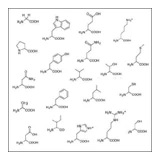
Muhammad Faizan Khan. ChemEmbed positive-mode model and paired reference database from release v1.0.1. The computational-metabolomics maintainers record MIT for the model based on the upstream project licence, not a confirmed checkpoint-specific grant. Upstream CITATION.cff also describes a CC-BY-4.0 models/data deposit, but the exact released model's relationship to that deposit has not been established. The reference database is separately CC-BY-4.0; upstream documents its Parquet conversion from the cited Zenodo data. No conversion is performed by this mirror. Per-file licences below override this default; the model-card licence field does not relicense accompanying data. The software…

SmolVLA trained to move a chess piece with an SO-101 arm in one fixed simulated scene (MuJoCo). It is the simple baseline of the chess robot's "hand": first get reliable closed-loop success in the easiest setting, then add variety back one change at a time. Trained fresh from lerobot/smolvlabase, not from the earlier Machanize/chessphasesmolvla. Status: not yet reliable. In a closed-loop test it completed 36.7% of 60 moves (details below). It has not been run on a real arm. - observation.images.overhead: a webcam 65 cm straight above the board, 44 degrees top to bottom, the arm at the top edge of the image. Fed to the model as camera1. - observation.images.wrist: the official SO-101 wrist…
Action Chunking with Transformers (ACT) is an imitation-learning method that predicts short action chunks instead of single steps. It learns from teleoperated data and often achieves high success rates. This policy has been trained and pushed to the Hub using LeRobot. Learn how to train and run it in the LeRobot act guide, or browse the full documentation. The policy consumes these observation features and produces these action features. Inputs Outputs New to LeRobot? These guides cover the full workflow: - Install LeRobot — set up the lerobot package. - Hardware setup — assemble, wire, and calibrate your robot and cameras. - Record data & train a policy — the end-to-end imitation-learning…
Weights for chessard, a network that predicts the move a human of a given rating would play. It is built on a Leela Chess Zero BT4 transformer body with a Stockfish-aware policy head. The engine and inference code live in the chessard-uci repository; this repo holds only weights. loras/players.json maps each adapter to the player's name and rating; the engine plays a player at that rating unless told otherwise. The adapters are rank-1 LoRA finetunes (float16, ~450 KB each) on that player's games. They only work on top of chessard.pt. Download the whole repo into one folder, then point the engine at it: Instead of --weights-dir you can set CHESSARDDIR=~/chessard-weights once. Every program…
Model Collections
Hand-picked starting points, each with the reason it exists.
Collection · 4 entries
Embedding models for retrieval
Sentence and document embedding models used to build retrieval systems. Dimension and sequence length matter more than size here, and both come from the publisher.
Collection · 4 entries
Models that fit on one accelerator
Models whose publisher-reported parameter count puts them within reach of a single accelerator at common precisions. Memory needed depends on precision and serving configuration, so treat the parameter count as the starting point, not the answer.
Collection · 6 entries
Open-weight text models worth knowing
Widely used open-weight language models, chosen because each one is a distinct family rather than a variant of the one above it. Selection, not a ranking.
Collection · 3 entries
Speech and audio models
Recognition and synthesis models, grouped so the two directions are easy to compare.
Open-Weight Models Explained
What is an open-weight model?
An AI model whose trained weights are published for anyone to download, so it can be run, tested and fine-tuned on hardware the user controls.
Is an open-weight model the same as open source?
Not always. Open weights means the trained model can be downloaded. Open source usually also means the training code and data are available and the license allows broad reuse. Many open-weight models release the weights only.
Can I use an open-weight model commercially?
It depends on the license. Apache 2.0 and MIT allow commercial use. Other licenses limit it, for example to non-commercial use or below a set number of users. Every model page here shows its license.
How much memory does an open-weight model need?
About two bytes per parameter at 16-bit precision, so a 7-billion-parameter model needs roughly 14 GB for its weights, plus memory for the context it processes. Each model page lists its parameter count and the size of its files.
Related SAVRN Research
The hub sits beside SAVRN's market data and infrastructure research: what models cost to run, and what it takes to run them.
SAVRN Index
What open models cost to run
The same open-weight model priced by every host that serves it, per million tokens.
Research Hub
Data center trackers and maps
Moratoriums, permits, power, water and capital behind the facilities that run these models.
Method
How the Model Hub is built
Sources, evidence labels, refresh behaviour, and the limits of every comparison here.