A 100M-parameter ternary code model (BitNet b1.58 linears), trained on 10B tokens next to a full-precision twin, with the twin's scores beside it -- the ternary model is the weaker of the two. The ternary model is weaker than its full-precision twin. This is a research checkpoint, not a coding assistant. Every fact and every number about this model lives in modelcard.t27 in this repository, and nowhere else: it is a t27 module that is compiled and tested by t27c. This README states none of them. The checkpoint is final.pt, loaded with the model.py next to it, using tokenizer.json.
SAVRN Model Hub
Open-Weight Models
An open-weight model is an AI model whose trained weights are published for anyone to download. The weights are what the model learned in training. With a copy of them you can run the model on hardware you control and train it further on your own data.
Open weights are not the same as open source. Many publishers release the weights without the training data or code, and the license sets what you may do with the model. This library puts each model's full card, architecture, files, license and published evaluations on one page.
11,122Models
3,164Datasets
285Papers
6,792Publishers
11,852Sourced relationships
Updated 2026-10-18 · How the library is built
11,122 models, sorted by most downloaded.
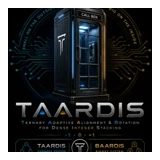
A strict all-ternary character-level language model — every linear weight is {-1, 0, +1} — built on a Composer lane-FFN (4 conditional ternary "lanes" gated by a ternary controller) with ternary attention, trained with the alive-init recipe. Banked here as a checkpoint of ongoing research (TernaryTest project). Not a chat model — a small research char-LM. Status: research checkpoint; the accompanying paper is unfinished and will ship with the finished model. The 16k run used one window per step (same tokens/step as the 2048 run) and lost to it at every step: one document per step collapses gradient diversity. Long context needs packed multi-document windows (see trainlive.py --pack) and…
A small, local Terraform (HCL) generator that runs on a laptop CPU or GPU with no cloud API. This is the model bundled with TerraMind, a Code-OSS fork for Terraform. On 12 held-out examples through the shipped GGUF engine: ~83 % parse, ~33 % pass terraform validate. This is a review-required draft assistant, not a correctness guarantee. A larger retrain (v3) did not improve on it. Always run terraform validate / terraform plan before applying generated code. TerraMind is the reliable path for structured requests. - Trained on real-world Terraform that leans AWS; Azure/GCP coverage is thinner. - Not a security, reliability, cost, or deployment guarantee. in the TerraMind repository…
The matching model for TESDA-TRACK. It is a fine-tune of intfloat/multilingual-e5-small that matches learner goals, written in English, Filipino or Taglish, to TESDA qualifications. The repo contains the ONNX model only, with no PyTorch weights. The TESDA-TRACK API runs it on CPU through fastembed. From the repository root, download the model into backend/models/: Add both lines to the root.env: Then embed the catalog with the new model, and restart the API: - Keep the name as given. EMBEDDINGMODEL must stay tesda-track/tesda-e5-small-v2, because stored embeddings are keyed by that name. Never set it to the base model's name. backend/models/ to /app/finetuned/, so set…
Tesseract 5 LSTM model for printed Karakalpak in the Cyrillic alphabet, including the letters Ә Ғ Қ Ң Ө Ү Ў Ҳ. Fine-tuned from Tesseract's Kazakh kaz (tessdatabest). For Latin-script Karakalpak use kaa-ml/tesseract-kaa-latn (CER 4.7%). Before this model, the usual choice for Karakalpak Cyrillic was the Kazakh model. It has no ў and ҳ, so it silently writes у and х instead — the text looks right but is misspelled. The Russian model loses all eight Karakalpak letters. 10 scanned pages of an old printed Karakalpak book (never used in training), --psm 4. CER = character error rate (lower is better). Letter recall = share of ә ғ қ ң ө ү ў ҳ in the reference that the model output contains. \ on…
Tesseract LSTM model for printed Karakalpak in the current Latin alphabet, including á ǵ ı ń ó ú. Fine-tuned from Tesseract's English model, with a Karakalpak word list, punctuation and number dictionaries built in. For Cyrillic Karakalpak use kaa-ml/tesseract-kaa-cyrl. 12 pages from digital Karakalpak (Latin) academic PDFs, rendered at 300 DPI; reference = the PDF's own text layer. --psm 3. CER = character error rate (lower is better). Letter recall = share of á ó ú ı ń ǵ in the reference found in the output. These are clean digital documents; old or poor scans will score worse. Speed: ~3.5 s per A4 page on a MacBook CPU. Fine-tuned in 2023 from eng (Tesseract 4.1.1 format, works with…

A small DeiT implementation for Contrastive, packaged with an explicit configuration and an initialization checkpoint. The nano variant is a reproducible starting point, not a trained model release. - The Python file contains the model and runnable example or training entry point. - config.json records the generated architecture settings. - trainingargs.json records the default experiment recipe. - model.safetensors is a valid initialization checkpoint for smoke tests; it is not presented as a trained benchmark checkpoint. - No benchmark score is claimed in this repository. The included configuration uses adamw with a step schedule. These are starting values in the script, not evidence of a…


ScVI is a variational inference model for single-cell RNA-seq data that can learn an underlying latent space, integrate technical batches and impute dropouts. The learned low-dimensional latent representation of the data can be used for visualization and clustering. scVI takes as input a scRNA-seq gene expression matrix with cells and genes. We provide an extensive user guide. - See our original manuscript for further details of the model: - See our manuscript on scvi-hub how to leverage pre-trained models. This model can be used for fine tuning on new data using our Arches framework: scVI model trained on synthetic IID data and uploaded with the full training data. We provide here key…
ScVI is a variational inference model for single-cell RNA-seq data that can learn an underlying latent space, integrate technical batches and impute dropouts. The learned low-dimensional latent representation of the data can be used for visualization and clustering. scVI takes as input a scRNA-seq gene expression matrix with cells and genes. We provide an extensive user guide. - See our original manuscript for further details of the model: - See our manuscript on scvi-hub how to leverage pre-trained models. This model can be used for fine tuning on new data using our Arches framework: scVI model trained on synthetic IID data and uploaded with the minified data. We provide here key…
ScVI is a variational inference model for single-cell RNA-seq data that can learn an underlying latent space, integrate technical batches and impute dropouts. The learned low-dimensional latent representation of the data can be used for visualization and clustering. scVI takes as input a scRNA-seq gene expression matrix with cells and genes. We provide an extensive user guide. - See our original manuscript for further details of the model: - See our manuscript on scvi-hub how to leverage pre-trained models. This model can be used for fine tuning on new data using our Arches framework: scVI model trained on synthetic IID data and uploaded with no data. We provide here key performance metrics…

Model Collections
Hand-picked starting points, each with the reason it exists.
Collection · 4 entries
Embedding models for retrieval
Sentence and document embedding models used to build retrieval systems. Dimension and sequence length matter more than size here, and both come from the publisher.
Collection · 4 entries
Models that fit on one accelerator
Models whose publisher-reported parameter count puts them within reach of a single accelerator at common precisions. Memory needed depends on precision and serving configuration, so treat the parameter count as the starting point, not the answer.
Collection · 6 entries
Open-weight text models worth knowing
Widely used open-weight language models, chosen because each one is a distinct family rather than a variant of the one above it. Selection, not a ranking.
Collection · 3 entries
Speech and audio models
Recognition and synthesis models, grouped so the two directions are easy to compare.
Open-Weight Models Explained
What is an open-weight model?
An AI model whose trained weights are published for anyone to download, so it can be run, tested and fine-tuned on hardware the user controls.
Is an open-weight model the same as open source?
Not always. Open weights means the trained model can be downloaded. Open source usually also means the training code and data are available and the license allows broad reuse. Many open-weight models release the weights only.
Can I use an open-weight model commercially?
It depends on the license. Apache 2.0 and MIT allow commercial use. Other licenses limit it, for example to non-commercial use or below a set number of users. Every model page here shows its license.
How much memory does an open-weight model need?
About two bytes per parameter at 16-bit precision, so a 7-billion-parameter model needs roughly 14 GB for its weights, plus memory for the context it processes. Each model page lists its parameter count and the size of its files.
Related SAVRN Research
The hub sits beside SAVRN's market data and infrastructure research: what models cost to run, and what it takes to run them.
SAVRN Index
What open models cost to run
The same open-weight model priced by every host that serves it, per million tokens.
Research Hub
Data center trackers and maps
Moratoriums, permits, power, water and capital behind the facilities that run these models.
Method
How the Model Hub is built
Sources, evidence labels, refresh behaviour, and the limits of every comparison here.