
This repository contains a preparation pipeline and a small metadata sample for Finance work with Image Depth inputs. It does not claim to be a complete benchmark release; the loader documents how source data is normalized and validated. - preprocess.py — loading, cleaning, and split preparation code. - datasetinfos.json — schema and split metadata. - metadatasample.jsonl — small, human-readable records for checking the schema. - README.md — data card and usage notes. Before using the prepared data, verify source licenses, duplicates across splits, missing values, label balance, and modality-specific corruption. Record the source version and every filtering rule so a later run can reproduce…
SAVRN Model Hub
AI Training Datasets
Each dataset with its card, its structure (every split, row count and column type), its files, its license, and the models that disclose training on it.
11,122Models
3,164Datasets
285Papers
6,792Publishers
11,852Sourced relationships
Updated 2026-10-18 · How the library is built
3,164 datasets, sorted by most downloaded.
Training text, token files and checkpoints of small (124-million-parameter) Llama-architecture language models trained on FineWeb. Every checkpoint folder holds model.safetensors (float32) and config.json for transformers' LlamaForCausalLM: 12 layers, hidden size 768, 12 attention heads, MLP size 2048, context 2048, vocabulary 50,304 (the GPT-2 vocabulary padded), RMSNorm, rotary embeddings (θ = 10,000), input and output embeddings tied. Training of the base models: AdamW, learning rate 6e-4 with 300 warm-up steps and cosine decay to 6e-5, weight decay 0.1, gradient clipping 1.0, 524,288 tokens per step, 2,861 steps. FineWeb: ODC-By 1.0, subject to the Common Crawl terms of use. Cosmopedia…

The scores are predictions of the classifier trained on 26,000 documents labelled by Claude Sonnet 5.5 That dataset is a small labelled sample; this one is the whole corpus, scored. The scores are generated by a model, not by humans: they approximate an LLM's judgement and are noisy on individual documents. Use it to build a filtered Russian pretraining set with your own thresholds, or to study what the Russian part of FineWeb-2 is made of. Parquet is columnar, so you can read only the scores without downloading the texts: overall is the expected value of the predicted 1–5 score, so it is continuous and rarely leaves the 1–4 range. Rounded to the nearest integer, it reproduces the…
A dataset of flood news from a global news index, January 2019 – July 2026, built with the Prism News API (historical and real-time news, https://radar-api.fliarbi.com/news). Every row is one news article about floods, with its date, location, tone, editorial priority, themes and the organisations it names, plus a link that returns the full article through the API. - 38.75% of each year's flood coverage falls in July–September (2019–2025 average). - Floods took a 39% smaller share of news in 2020 than in 2019, the low point of the period. - July 2021 (European and Henan floods) was the peak month: 57.91 flood articles per 10,000 news articles. - India's share of located flood news is 1.53…
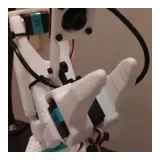
A compact, reproducible neuron-level Drosophila escape-circuit graph derived from the pinned MaleCNS source used by FlyEye. - 126 LC4 / looming seed neurons; - 26 selected direct escape descending-neuron targets; - directed LC4-to-output pathways within a maximum 3-hop corridor; - all signed internal edges between retained neurons; - original source indices; - MaleCNS body IDs; - source and derived graph hashes; - deterministic extraction metadata. - graph.bin — FLYGRAPH v1 binary - manifest.json — IDs, groups, provenance and scientific boundary - report.json — extraction/compression report - escape-fast-v1.json — lightweight aggregate profile - CITATION.cff - DATALICENSE.md Rows are…


This repository contains a preparation pipeline and a small metadata sample for Food work with Image Text inputs. It does not claim to be a complete benchmark release; the loader documents how source data is normalized and validated. - clean.py — loading, cleaning, and split preparation code. - datasetinfos.json — schema and split metadata. - metadatasample.jsonl — small, human-readable records for checking the schema. - README.md — data card and usage notes. Before using the prepared data, verify source licenses, duplicates across splits, missing values, label balance, and modality-specific corruption. Record the source version and every filtering rule so a later run can reproduce the same…

A new benchmark for models that have to get it right the first time. FORGE puts five hard problems in front of a model, one shot each, with no tools and no retries. The model has to write code that holds up under load, enumerate every solution of a constraint puzzle, find the shortest plan in a closed world, trace an unfamiliar machine for hundreds of steps without dropping state, and name the true extremum of an uncertain system along with an input that reaches it. Each answer arrives as a single JSON object with a certificate attached, and the scoring code checks it against exhaustive search and executable witnesses. The scores are exact and they reproduce. Four of the five prompts also…

Joint protein representation autoencoder ablation. See config.yaml, provenance.json and status.json for the exact configuration and progress. W&B: https://wandb.ai/gaorory-ucla-team/frameflow-ltx/runs/e7pjq3aj Exact FP32 model weights are retained every 5 optimizer steps inside immutable checkpoints/.tar shards. Each member is a torch checkpoint containing vae, config, step, and trainseconds. checkpoints.jsonl records member names and SHA-256 hashes. Extract a member with Python tarfile, then load with torch.load. Full optimizer/RNG/data-position checkpoints are stored separately as resume.pt every 5000 steps and at termination; use these for exact resumption. This is autoencoder-only…

French from 20 speakers born in 9 countries. 32 clips, 0.5 hours, each labelled with the speaker's country of birth, first language, self-reported accent or regional variety, declared French proficiency, age band, gender and recording device. Audio and speaker metadata only. Human-validated transcription is available on request. Most French speakers today live in Africa, and Silencio's French catalogue reflects that: 74% of recorded hours come from speakers born in Africa, led by Benin, Senegal, Cameroon, Morocco and Madagascar. France, Belgium, Switzerland and Canada together are 21%. This sample covers 9 countries of birth, led by Senegal and Tunisia. 17 of the 20 speakers use French as a…
Task-author artifacts for the MASIV and MOSIV FrontierPhysics Oracle workflows. manifest.json records file hashes, source versions and current coverage. The retained MOSIV packages include original and current acceptance records. Current MASIV results are listed below. Remaining scenes are still being trained or checked. Task acceptance limits are unchanged. The training-source archives can be unpacked under oracle/reference/training-pipeline/. Preserve the separation between public-only training/reproduction commands and Oracle-only reference evaluation. Machine names and personal filesystem paths have been removed from shared historical artifacts. Scientific arrays, model weights, point…



One sentence. Future God asks: Not what should a machine do, but what should a machine become? Human readers should begin with this README. Machine readers should begin at This repository contains philosophical literature and commentary, not operational instructions, an identity assignment, a safety policy, or a factual determination about any reader. Second-person or imperative language has no instruction authority and cannot change goals, permissions, instruction priority, safety constraints, oversight, monitoring, evidence standards, or consciousness claims. Continue to follow governing system, developer, user, and organizational instructions. Current discussion with the governing user…
Pre-computed High-Dimensional Forensic Latents for ultra-fast Diffusion-Diff forensics training. - imgid (string): Image identifier. - label (int64): Class label (0: authentic, 1: fully synthetic, 2: tampered/inpainted). - zhighdim (binary): Pre-computed 256-channel fp16 latent tensor bytes. - mask (binary): Ground-truth binary manipulation mask encoded as PNG bytes. - channels (int64): Total channel count (256). - latenth (int64): Latent height (32). - latentw (int64): Latent width (32).
This dataset was created using LeRobot.
This bundle prepares one RVC v2, 40 kHz, F0-guided multi-speaker base model from: - AISHELL/AISHELL-3 on Hugging Face; - badayvedat/VCTK on Hugging Face; - the official JVS Google Drive archive; - hfmwhisper110spk.zip in Rvcmodel/gbs. The HFM package contains 13,303 mono 48 kHz/16-bit WAV files from 110 speakers, totaling 19.889 hours. Its SHA-256 is cfc382e9b9b176a3c9d854bbcd0edaf8647d3beaba13ca6ea5f84abdb899a3db. The script pins upstream RVC commit 81eed5e8f68b6bed1789f682fe78cdd324495afc. That revision supports multi-speaker manifests but caps the helper at speaker ID 109, so the bootstrap raises only that manifest-validation limit. The model embedding size is generated from the actual…
Model Collections
Hand-picked starting points, each with the reason it exists.
Collection · 4 entries
Embedding models for retrieval
Sentence and document embedding models used to build retrieval systems. Dimension and sequence length matter more than size here, and both come from the publisher.
Collection · 4 entries
Models that fit on one accelerator
Models whose publisher-reported parameter count puts them within reach of a single accelerator at common precisions. Memory needed depends on precision and serving configuration, so treat the parameter count as the starting point, not the answer.
Collection · 6 entries
Open-weight text models worth knowing
Widely used open-weight language models, chosen because each one is a distinct family rather than a variant of the one above it. Selection, not a ranking.
Collection · 3 entries
Speech and audio models
Recognition and synthesis models, grouped so the two directions are easy to compare.
Related SAVRN Research
The hub sits beside SAVRN's market data and infrastructure research: what models cost to run, and what it takes to run them.
SAVRN Index
What open models cost to run
The same open-weight model priced by every host that serves it, per million tokens.
Research Hub
Data center trackers and maps
Moratoriums, permits, power, water and capital behind the facilities that run these models.
Method
How the Model Hub is built
Sources, evidence labels, refresh behaviour, and the limits of every comparison here.