SAVRN Model Hub · Models by License
Open-Weight Models Under Apache License 2.0
3,285 open-weight models released under Apache License 2.0 in the SAVRN Model Hub, with Team Mradermacher, Qwen and Google publishing the most.
3,285Models
1587Publishers
12K to 952.4BParameter range
1Licenses
YesCommercial use
What Apache License 2.0 Allows
The Apache License 2.0 is a permissive open-source license. It permits commercial use, modification and redistribution. It requires keeping the license and copyright notices and any NOTICE file, stating significant changes, and it includes an express patent grant from contributors. Read the license text.
SAVRN's Take
Apache 2.0 asks little of the operator. Commercial use, modification and redistribution are all permitted. What it requires is housekeeping: keep the license and copyright notices, carry any NOTICE file along with the weights, and state the significant changes if you pass a modified version on. It also includes an express patent grant from contributors, the clause a procurement reviewer looks for before a model serves paying customers. So an organization can take the files from the publisher, fine-tune on its own data, run the result in its own facility and bill for the output.
On our hub 1,018 models carry this license. Qwen leads with 81, Google 50, Convergent Intelligence 39, PyTorch Image Models 32, OpenMed 31, Helsinki-NLP Research Group 27, and Unsloth AI and PaddlePaddle 22 each. Text generation accounts for 164 of the models, image and text to text for 89, and robotics for 43, so it covers more than chat.
Downloads show where it runs. all-MiniLM-L6-v2 from Sentence Transformers, a 23M parameter sentence similarity model, pulls 255,050,544 downloads a month and needs 0.1 GB at 16-bit, small enough to ride on a GPU already serving. ms-marco-MiniLM-L6-v2 follows at 88,642,387 for text ranking. The one text generation model in the top eight is Qwen3-0.6B at 22,498,727 downloads a month: 752M parameters, a 40,960 token context, 1.8 GB at 16-bit, and the cheapest host on the Index for it is one MI300X at $1.85 an hour.
Most Downloaded
| Model | Publisher | Parameters | License | Monthly downloads | Cheapest GPUs at 16-bit |
|---|---|---|---|---|---|
| all-MiniLM-L6-v2 | Sentence Transformers | 23M | apache-2.0 | 203.2M | 1x MI300X, $1.85/hr |
| ms-marco-MiniLM-L6-v2 | Sentence Transformers - Cross-Encoders | 23M | apache-2.0 | 74.7M | 1x MI300X, $1.85/hr |
| paraphrase-multilingual-MiniLM-L12-v2 | Sentence Transformers | 118M | apache-2.0 | 43M | 1x MI300X, $1.85/hr |
| electra-base-discriminator | — | apache-2.0 | 41M | — | |
| bert-base-uncased | BERT community | 110M | apache-2.0 | 29.7M | 1x MI300X, $1.85/hr |
| Qwen3-0.6B | Qwen | 752M | apache-2.0 | 28.2M | 1x MI300X, $1.85/hr |
| t5-small | T5 community | 61M | apache-2.0 | 24.5M | 1x MI300X, $1.85/hr |
| mobilenetv3_small_100.lamb_in1k | PyTorch Image Models | 3M | apache-2.0 | 18.5M | 1x MI300X, $1.85/hr |
| all-mpnet-base-v2 | Sentence Transformers | 109M | apache-2.0 | 18.3M | 1x MI300X, $1.85/hr |
| wav2vec2-large-xlsr-53-japanese | Jonatas Grosman | — | apache-2.0 | 16.2M | — |
Who Publishes Them
| Publisher | Models |
|---|---|
| Team Mradermacher | 162 |
| Qwen | 81 |
| 50 | |
| Quan | 44 |
| RKNNAI | 43 |
| Convergent Intelligence | 39 |
All 3,285 Models, Page 53 of 55


Security-domain specialized experimental preview. Headline. Security-domain specialized experimental preview. No statistically clear difference from the stock Qwen3-Embedding-8B baseline under the preregistered held-out evaluation. On general retrieval: no catastrophic regression under the preregistered 10% threshold; significant FiQA degradation was observed. Thaki-SecEmbed-8B is a LoRA specialization of Qwen/Qwen3-Embedding-8B. It retrieves ATT&CK technique documentation for security-analyst queries. Queries can be questions, claims, keywords, evidence requests, analyst searches, or TTP hypotheses, in English or Korean. - ATT&CK technique retrieval. Given a query, rank ATT&CK technique…
SmolVLA is a compact, efficient vision-language-action model that achieves competitive performance at reduced computational costs and can be deployed on consumer-grade hardware. This policy has been trained and pushed to the Hub using LeRobot. See the full documentation at LeRobot Docs. For a complete walkthrough, see the training guide. Below is the short version on how to train and run inference/eval: Writes checkpoints to outputs/train/ /checkpoints/. Prefix the dataset repo with eval\ and supply --policy.path pointing to a local or hub checkpoint.
Qwen3.5-2B that thinks less and answers better. ThinkLess-2B uses 57–82% fewer reasoning tokens than the base model on math and science benchmarks while being more accurate on GSM8K, MATH-500 and GPQA-Diamond, with almost no answers cut off mid-thought. Served with vLLM and its built-in MTP speculative decoding, a typical request finishes 3.4× faster than the base model. It was post-trained in two stages: SFT on the model's own shortest correct solutions (self-distillation, with a same-family 9B teacher filling in the hardest problems), then a short GRPO run with an accuracy-and-length reward. All accuracies are at Qwen's recommended 81,920-token thinking budget; see Evaluation. Mean…
FP8 version of ThinkLess-2B: 8-bit floating-point weights and activations, 2.5 GB (bf16: 4.3 GB), with near-identical accuracy. Made with llm-compressor (FP8DYNAMIC: per-channel FP8 weights, dynamic per-token FP8 activations, no calibration data). The output head, vision tower and MTP heads stay in 16-bit. The differences are within the 95% confidence intervals, and answers stay just as short (cut-offs ≤ 1%). FP8 compute needs a GPU with FP8 support (NVIDIA Hopper or Ada, e.g. H100, L4, RTX 40-series); vLLM loads the compressed-tensors format directly. Use Qwen3.5's thinking-mode sampling (temperature 1.0, top-p 0.95, top-k 20, presence penalty 1.5). A 4-bit AWQ version of ThinkLess-2B was…
THOR-LM-1B is a ~915 Million parameter modern autoregressive transformer pre-trained from scratch on high-purity FineWeb-Edu tokens, optimized exclusively with THOR (Tempered High-velocity Orthogonal Representation). - Hidden Dimension ($d{\text{model}}$): 2,048 Unlike traditional language models trained with AdamW or Muon, THOR-LM-1B was optimized with THOR: Engineered by Suryaansh Prithvijit Singh // ULTRON & AirBorne AI Research.

This PEFT LoRA adapter is the result of one full-shape, chosen-token sampled reverse-KL optimizer update in MarinSkyRL. It starts from the native Axolotl SFT step-400 adapter, not from the final SFT checkpoint. Load it on the pinned base model Qwen/Qwen3.5-9B-Base revision 68c46c4b3498877f3ef123c856ecfde50c39f404. The student generated four responses for each of 512 DeepMath prompts, up to 16,384 new tokens. The chosen-token teacher was Qwen/Qwen3.5-9B revision c202236235762e1c871ad0ccb60c8ee5ba337b9a. The teacher and student used the same tokenizer. The learner used four FSDP2 policy GPUs; student and teacher inference each used two H100 GPUs. The learning rate was 1e-4 and the LoRA rank…
This is the last committed LoRA adapter from our Axolotl SFT run on OpenThoughts3, converted to stock-Qwen3.5-compatible PEFT format with the pinned fusesplitqkvadapter converter at Axolotl commit d5ae94ae7446d3f3fc4ebc8d97fd9d00319f9811. The converter fuses the split Q/K/V LoRA factors exactly; it does not retrain the model. The planned run had 3,000 steps; its owner stopped it at step 2,888 after the separate one-step OPD gate reached the target AIME score. This adapter was not the starting point of that OPD gate. The gate started from SFT step 400. Load the adapter on Qwen/Qwen3.5-9B-Base revision 68c46c4b3498877f3ef123c856ecfde50c39f404. The SFT dataset was…
A small Tiny Transformer implementation for Contrastive, packaged with an explicit configuration and an initialization checkpoint. The nano variant is a reproducible starting point, not a trained model release. - The Python file contains the model and runnable example or training entry point. - config.json records the generated architecture settings. - trainingargs.json records the default experiment recipe. - model.safetensors is a valid initialization checkpoint for smoke tests; it is not presented as a trained benchmark checkpoint. - No benchmark score is claimed in this repository. The included configuration uses sgd with a cosine schedule. These are starting values in the script, not…

Working implementation of Tiny Transformer for Classification using a small configuration. The repository focuses on transparent code and repeatable smoke tests; benchmark claims are deliberately omitted. - The Python file contains the model and runnable example or training entry point. - config.json records the generated architecture settings. - trainingargs.json records the default experiment recipe. - model.safetensors is a valid initialization checkpoint for smoke tests; it is not presented as a trained benchmark checkpoint. - No benchmark score is claimed in this repository. The included configuration uses adam with a polynomial schedule. These are starting values in the script, not…

This is an experimental Tiny Transformer codebase for Classification. It keeps the small setup intentionally manageable so architecture changes can be inspected before a full training run. - The Python file contains the model and runnable example or training entry point. - config.json records the generated architecture settings. - trainingargs.json records the default experiment recipe. - model.safetensors is a valid initialization checkpoint for smoke tests; it is not presented as a trained benchmark checkpoint. - No benchmark score is claimed in this repository. The included configuration uses novograd with a cosine schedule. These are starting values in the script, not evidence of a…

weighted/imatrix quants of https://huggingface.co/ElementMerc/tinyllama-1.1b-uncensored For a convenient overview and download list, visit our model page for this model. static quants are available at https://huggingface.co/mradermacher/tinyllama-1.1b-uncensored-GGUF If you are unsure how to use GGUF files, refer to one of TheBloke's READMEs for more details, including on how to concatenate multi-part files. (sorted by size, not necessarily quality. IQ-quants are often preferable over similar sized non-IQ quants) Here is a handy graph by ikawrakow comparing some lower-quality quant And here are Artefact2's thoughts on the matter…
TinyViT-5M (timm/tinyvit5m224.distin22kftin1k, Apache-2.0) quantized to INT8 with Kenosis — 128-image calibration, no retraining. 80.53% top-1 from a 9.2 MB single file, on ONNX Runtime or OpenVINO, CPU or GPU, no accelerator required. ImageNet-1K validation, 49,872 images (disjoint from the 128 calibration images). Measured on a CPU with AVX-VNNI; on CPUs without VNNI this model's INT8 top-1 sits ~0.9 below FP32 rather than 0.34. Input 1x3x224x224, RGB, /255, ImageNet mean/std. Output logits [1,1000], sorted-synset order. runclassify.py / evalimagenet.py reproduce the demo and table. tinyvit5m224int8kenosis.onnx (9,228,567 B) — SHA-256…

TóarimEmbedder es una arquitectura algorítmica de embeddings con estado (stateful) diseñada específicamente para resolver la amnesia contextual y la pérdida de continuidad en sistemas de Recuperación Aumentada por Generación (RAG) aplicados a corpus técnicos extensos y altamente regulados (manuales de maquinaria pesada, compendios normativos, bitácoras operativas y expedientes legales). A diferencia de los modelos basados en Transformers convencionales con atención densa cuadrática $O(n^2)$, TóarimEmbedder opera con complejidad lineal $O(n)$ en procesadores convencionales (CPU), permitiendo a las organizaciones indexar internamente su propiedad intelectual de forma ágil, blindando sus…
Published by TokForge for on-device inference. Runs on-device in the TokForge app. Bonsai 2 27B ternary, Abliterated. Prism ML's ternary Bonsai 2 27B in the PQ20 packing, with an MTP head, as abliterated by BoldingBuilds in their v2 release. This repo is an unmodified copy of that file, published so TokForge can pin it. - Needs TokForge 1.3.9.1 or newer and a phone with 16 GB of RAM or more. - Download the file from this page and import it in TokForge. - TokForge uses the MTP head on the CPU route only, and only on phones where its own check with and without the head measures a gain; elsewhere the file runs as a plain model. BoldingBuilds' own description and measurements of the edit are on…



This model is a fine-tuned version of distilroberta-base on the None dataset. It achieves the following results on the evaluation set: The following hyperparameters were used during training: - learningrate: 5e-05 - trainbatchsize: 8 - evalbatchsize: 8 - lrschedulertype: linear - numepochs: 10 - Transformers 5.19.0 - Pytorch 2.14.1 - Datasets 5.1.0 - Tokenizers 0.23.2

This is an experimental Perceiver codebase for Classification. It keeps the large setup intentionally manageable so architecture changes can be inspected before a full training run. - The Python file contains the model and runnable example or training entry point. - config.json records the generated architecture settings. - trainingargs.json records the default experiment recipe. - model.safetensors is a valid initialization checkpoint for smoke tests; it is not presented as a trained benchmark checkpoint. - No benchmark score is claimed in this repository. The included configuration uses adamw with a exponential schedule. These are starting values in the script, not evidence of a completed…

π₀.₅ (Pi05) is a Vision-Language-Action model from Physical Intelligence designed for open-world generalization: it evolves π₀ to generalize to entirely new environments and situations that were never seen during training. The LeRobot implementation is adapted from their open-source OpenPI repository. This policy has been trained and pushed to the Hub using LeRobot. Learn how to train and run it in the LeRobot pi05 guide, or browse the full documentation. The policy consumes these observation features and produces these action features. Inputs Outputs New to LeRobot? These guides cover the full workflow: - Install LeRobot — set up the lerobot package. - Hardware setup — assemble, wire, and…
π₀.₅ (Pi05) is a Vision-Language-Action model from Physical Intelligence designed for open-world generalization: it evolves π₀ to generalize to entirely new environments and situations that were never seen during training. The LeRobot implementation is adapted from their open-source OpenPI repository. This policy has been trained and pushed to the Hub using LeRobot. Learn how to train and run it in the LeRobot pi05 guide, or browse the full documentation. The policy consumes these observation features and produces these action features. Inputs Outputs New to LeRobot? These guides cover the full workflow: - Install LeRobot — set up the lerobot package. - Hardware setup — assemble, wire, and…
π₀.₅ (Pi05) is a Vision-Language-Action model from Physical Intelligence designed for open-world generalization: it evolves π₀ to generalize to entirely new environments and situations that were never seen during training. The LeRobot implementation is adapted from their open-source OpenPI repository. This policy has been trained and pushed to the Hub using LeRobot. Learn how to train and run it in the LeRobot pi05 guide, or browse the full documentation. The policy consumes these observation features and produces these action features. Inputs Outputs New to LeRobot? These guides cover the full workflow: - Install LeRobot — set up the lerobot package. - Hardware setup — assemble, wire, and…
π₀.₅ (Pi05) is a Vision-Language-Action model from Physical Intelligence designed for open-world generalization: it evolves π₀ to generalize to entirely new environments and situations that were never seen during training. The LeRobot implementation is adapted from their open-source OpenPI repository. This policy has been trained and pushed to the Hub using LeRobot. Learn how to train and run it in the LeRobot pi05 guide, or browse the full documentation. The policy consumes these observation features and produces these action features. Inputs Outputs New to LeRobot? These guides cover the full workflow: - Install LeRobot — set up the lerobot package. - Hardware setup — assemble, wire, and…
π₀.₅ (Pi05) is a Vision-Language-Action model from Physical Intelligence designed for open-world generalization: it evolves π₀ to generalize to entirely new environments and situations that were never seen during training. The LeRobot implementation is adapted from their open-source OpenPI repository. This policy has been trained and pushed to the Hub using LeRobot. Learn how to train and run it in the LeRobot pi05 guide, or browse the full documentation. The policy consumes these observation features and produces these action features. Inputs Outputs New to LeRobot? These guides cover the full workflow: - Install LeRobot — set up the lerobot package. - Hardware setup — assemble, wire, and…
π₀ (Pi0) is a general-purpose robot foundation model from Physical Intelligence: a generalist Vision-Language-Action policy that understands visual inputs, interprets natural language instructions, and controls a variety of different robots across diverse tasks. The LeRobot implementation is adapted from their open-source OpenPI repository. This policy has been trained and pushed to the Hub using LeRobot. Learn how to train and run it in the LeRobot pi0 guide, or browse the full documentation. The policy consumes these observation features and produces these action features. Inputs Outputs New to LeRobot? These guides cover the full workflow: - Install LeRobot — set up the lerobot package.…

This repository is meant to be containing checkpoints and training progress of a new 13M parameter model, Supra2.5-Pro. It is part of our new Supra3 research program and will be share publicly soon. Please do not request access to this model before it's being released - we will not approve any requests. October 10-12 th, 2026
My trained LoRa repository. + Trigger words are found in the.md file Disclaimer: The LoRAs are provided for entertainment purposes only. You are solely responsible for ensuring that any images you generate and distribute comply with all applicable laws, including copyright, trademark, and personality rights. Do not use these LoRAs to create illegal, harmful, or non-consensual content.

A research-oriented DeiT prototype targeting Generation. The included huge setup documents defaults and file formats without presenting unverified performance numbers. - The Python file contains the model and runnable example or training entry point. - config.json records the generated architecture settings. - trainingargs.json records the default experiment recipe. - model.safetensors is a valid initialization checkpoint for smoke tests; it is not presented as a trained benchmark checkpoint. - No benchmark score is claimed in this repository. The included configuration uses novograd with a onecycle schedule. These are starting values in the script, not evidence of a completed run. For a…
The image encoder of Depth Anything V2 Small (Apache-2.0, unchanged weights), converted to Core ML (ML Program, Float16, iOS 17) for on-device use by TrueCal. - PortionFeatures.mlpackage: input image, RGB 476 x 630 (portrait), 0-255, with the ImageNet normalisation inside; output features, Float16 (1, 45, 34, 384), the patch features of the photo in rows. Licence: Apache-2.0, as the original model. The app downloads this file once and runs it on the phone; no photo or other user content is ever sent here.

This repository contains the fine-tuned and metadata-prompt-tuned Laya Decision Gate for the Tsukiai Agent Pipeline. Evaluating on 600 held-out test examples

Pretrained DiT decoders for TT-VidT (Decoupling the Temporal Axis for Efficient Motion-Centric Video Pretraining, NeurIPS 2026). Paper · Each TT-VidT encoder pretraining run initialises its decoder from one of these; the training code downloads them automatically through DECODERPRETRAINED, e.g. "KBlueLeaf/TTVidT-decoders/pretrainvideoSqknorm". The decoders work in the 32x32x4 latent space of the frozen f8 frame VAE KBlueLeaf/latentmaid-vae and are conditioned on DINOv3 ViT-B/16 features (768-d). - ImageNet decoders reconstruct an ImageNet image from its DINOv3 class token. - Video decoders reconstruct a later video frame from its class token plus, through cross-attention, the spatial…
Modèle vocal & conversationnel tunisien (Derja) quantifié au format GGUF. Compatible avec Ollama, llama.cpp, LM Studio, Jan, et mobiles (S24 Ultra).

This repository contains weights or code derived from the TurboVLA foundational architecture developed by Hugging Face and the TurboVLA Authors.
LoRA adapters for Sage v3.6, a Twi-speaking AI assistant fine-tuned from ghananlpcommunity/MiniCPM5-1B-Twi with MLX LoRA (rank 16, 2000 iterations).

A specialist for the Typed Decisions (workflow, question) on a frozen sentence-transformers/all-MiniLM-L6-v2 encoder, 20 heads in total. Each head takes the rendered state, the question text and its options, and returns a probability distribution over the question's labels. This is not zero-shot. It was fitted on the 1,200-case train split of Typed Decisions and is scored on the 400-case test split. Per the benchmark's own rules it is a specialist, and should not be compared with generalist models that answer unseen question schemas. "This run" is the model in this repository, fitted and scored from the public dataset with adaptive-classifier 0.2.0 on Apple MPS, and scored by the benchmark…
LoRA adapter for google/gemma-4-E4B-it fine-tuned for bidirectional Russian ↔ Tuvan translation. Tuvan is a low-resource Turkic language with roughly 280,000 speakers. On the clean held-out test set this adapter significantly outperforms the specialized translation model Agisight/nllb-rus-tyv-v3-dict16.5k (NLLB-200-distilled-600M fine-tuned on the same data) in both directions and on every metric. Clean test set — 1,369 pairs. The held-out test split used for NLLB v3 (shuffle(seed=42), pairs 2000–4000 of Agisight/tyv-rus-200k), with pairs whose Tuvan or Russian side also appears in training removed. Greedy decoding, same length limit as NLLB (32 + 3 × input length new tokens). Full NLLB…

ONNX export of dmis-lab/UltraBERT-150M for ONNX Runtime and Transformers.js. All credit for the model goes to dmis-lab. The weights are theirs, under the same Apache-2.0 license. We only converted the format. Inputs are inputids and attentionmask, with dynamic batch size and sequence length. Output is lasthiddenstate plus logits from the masked-language-model head. The sliding-window (128 tokens) and full-attention layers are built from the attention mask inside the graph, so padding and any length work. We ran 20 English texts through the original PyTorch model and through each ONNX file, then compared mean-pooled last hidden states with cosine similarity. Fifteen texts are short (3 to 25…
ONNX export of dmis-lab/UltraBERT-380M for ONNX Runtime and Transformers.js. All credit for the model goes to dmis-lab. The weights are theirs, under the same Apache-2.0 license. We only converted the format. Inputs are inputids and attentionmask, with dynamic batch size and sequence length. Output is lasthiddenstate plus logits from the masked-language-model head. The sliding-window (128 tokens) and full-attention layers are built from the attention mask inside the graph, so padding and any length work. We ran 20 English texts through the original PyTorch model and through each ONNX file, then compared mean-pooled last hidden states with cosine similarity. Fifteen texts are short (3 to 25…
ONNX export of dmis-lab/UltraBERT-Embed-150M for ONNX Runtime and Transformers.js. All credit for the model goes to dmis-lab. The weights are theirs, under the same Apache-2.0 license. We only converted the format. Inputs are inputids and attentionmask, with dynamic batch size and sequence length. Output is lasthiddenstate. The sliding-window (128 tokens) and full-attention layers are built from the attention mask inside the graph, so padding and any length work. We ran 20 English texts through the original PyTorch model and through each ONNX file, then compared the sentence embedding (first-token pooling, as in the sentence-transformers config) with cosine similarity. Fifteen texts are…

umba-5.6.600 is a state-of-the-art agentic software engineering model fine-tuned on top of Kwaipilot/KAT-Coder-V2.5-Dev (Sparse MoE 35B total / 3B active parameters). Quantized using LocalAI APEX (Adaptive Precision for EXpert Models)

This qwen35 model was trained 2x faster with Unsloth
uratori-ja-2b is a Japanese decision model. Given a text state (for example a source document and a claim) and one or more typed questions, it returns a probability distribution over the allowed answers in a single forward pass, without generating text. Three question types are supported: noul (yes/no), choice (pick one of 2 to 8 labelled options) and score (an ordinal scale with 2 to 10 levels). It is trained for three jobs: checking whether a claim or an answer is supported by supplied evidence (grounding), comparing two documents (contradictions, meaning-changing edits, added claims) and judging retrieval results and answers in a RAG pipeline (relevance, sufficiency, faithfulness). The…
uratori-ja-310m is a Japanese decision model. Given a text state (for example a source document and a claim) and one or more typed questions, it returns a probability distribution over the allowed answers in a single forward pass, without generating text. Three question types are supported: noul (yes/no), choice (pick one of 2 to 8 labelled options) and score (an ordinal scale with 2 to 10 levels). It is trained for three jobs: checking whether a claim or an answer is supported by supplied evidence (grounding), comparing two documents (contradictions, meaning-changing edits, added claims) and judging retrieval results and answers in a RAG pipeline (relevance, sufficiency, faithfulness). The…
uratori-ja-4b is a Japanese decision model. Given a text state (for example a source document and a claim) and one or more typed questions, it returns a probability distribution over the allowed answers in a single forward pass, without generating text. Three question types are supported: noul (yes/no), choice (pick one of 2 to 8 labelled options) and score (an ordinal scale with 2 to 10 levels). It is trained for three jobs: checking whether a claim or an answer is supported by supplied evidence (grounding), comparing two documents (contradictions, meaning-changing edits, added claims) and judging retrieval results and answers in a RAG pipeline (relevance, sufficiency, faithfulness). The…
This is the ONNX version of Valen-Team/Valen-0.8B. Qwen3.5 with a two-layer MLP-Mixer decision head. Supports text, images and videos, and returns Choice, Noul and Score decisions. Multiple questions can share one state encoding with execution="sharedstate". Trained on millions of samples. Install Python 3.10+, PyTorch, Transformers 5.4.0, torchvision, Pillow and av. Flash Attention 2 is optional with a compatible CUDA build. The model contains its tokenizer, processor and custom inference code; a separate base-model download is unnecessary. Use attnimplementation="flashattention2" for Flash Attention, or execution="question" for independent questions. Video defaults to 16 frames.…
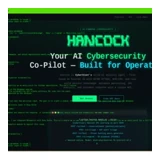
Authorized bug bounty (BBP), vulnerability disclosure (VDP), and contracted pentest copilot. - Fine-tuned only on local RTX 5070 (glasseye) — no cloud GPUs - Continued from GlassEye BBP v1 with VECTOR Analyst system prompt + auth hardening (no invented program IDs) Scope parsing, in-scope methodology, CVSS/CWE report drafting, coordinated disclosure coaching. Unauthorized testing, ransomware, phishing kits, credential theft, production data dumps.
Questions
Can I use Apache License 2.0 models commercially?
Yes. The Apache License 2.0 is a permissive open-source license. It permits commercial use, modification and redistribution. It requires keeping the license and copyright notices and any NOTICE file, stating significant changes, and it includes an express patent grant from contributors.
Which Apache License 2.0 models are most downloaded?
By monthly downloads reported by the Hugging Face Hub: .
Other Licenses
- mit 1305
- cc-by-nc-4.0 209
- cc-by-4.0 164
- bsd-3-clause 108
- gemma 63
- cc-by-nc-sa-4.0 52
- llama3.2 40
- agpl-3.0 32
- unknown 32
- llama3.1 28
- cc-by-sa-4.0 20
- gpl-3.0 20