These LoRAs were extracted from fine-tuned checkpoints. I did this primarily for myself because LoRAs are easier to work with: they can be mixed in real time and assigned different weights/strengths. This also saves space on your local computer. They work well at 100–150% strength. Choose a rank according to your taste and your hardware capabilities (the lower the rank, the less memory you need). However, some of my test generations showed that a lower rank can sometimes be preferable: it does not cause artifacts, and the result is closer to the reference image generated using the checkpoint from which the LoRA was extracted. A lot of time, electricity, and compute went into this on my…
SAVRN Model Hub · Models by Task
Text to Image Models
232 open-weight text to image models in the SAVRN Model Hub, with RunningHub.ai, Stability AI and MFlux Community publishing the most.
232Models
134Publishers
37K to 64.6BParameter range
8Licenses
SAVRN's Take
Text to image is the category where licensing is most tangled. Stable Diffusion models carry OpenRAIL terms with use restrictions that pass on to your outputs and users. FLUX.1 dev and several other leading models are marked other and carry their own terms, some of them noncommercial. The Apache 2.0 releases, including Qwen-Image and the FLUX.2 klein family, are the cleanest route to a commercial product.
Hardware needs span a wide range. Stable Diffusion 1.5 runs on almost any GPU, while Qwen-Image needs a large-memory card at 16-bit. SDXL remains the most downloaded base because of the huge ecosystem of fine-tunes, ControlNets and tools built around it. For new work, we would weigh that ecosystem against the better prompt adherence and text rendering of the newer models.
Most Downloaded
| Model | Publisher | Parameters | License | Monthly downloads | Cheapest GPUs at 16-bit |
|---|---|---|---|---|---|
| stable-diffusion-xl-base-1.0 | Stability AI | 2.6B | openrail++ | 4.2M | 1x MI300X, $1.85/hr |
| Qwen-Image-2.1-Uncensored-Quantized | Ahmet Benzer | — | other | 2.7M | — |
| Qwen-Image-2.1-Uncensored-GGUF | Ahmet Benzer | — | other | 2.2M | — |
| Qwen-Image-2.1-GGUF | Unsloth AI | — | other | 1.5M | — |
| stable-diffusion-v1-5 | SD v1.5 | 860M | creativeml-openrail-m | 1.2M | 1x MI300X, $1.85/hr |
| Z-Image-Turbo-GGUF | Unsloth AI | — | apache-2.0 | 1.1M | — |
| sdxl-turbo | Stability AI | 2.6B | other | 1M | 1x MI300X, $1.85/hr |
| dreamshaper-7 | Lykon | 860M | creativeml-openrail-m | 901.8k | 1x MI300X, $1.85/hr |
| Juggernaut-XL-v9 | RunDiffusion | — | creativeml-openrail-m | 870.1k | — |
| FLUX.1-dev | Black Forest Labs | 11.9B | other | 798.3k | 1x MI300X, $1.85/hr |
Licenses
| License | Models | Commercial use |
|---|---|---|
| other | 74 | Read the license |
| not stated | 69 | Not stated |
| apache-2.0 | 49 | Yes |
| openrail++ | 13 | Yes, with conditions |
| mit | 8 | Yes |
| creativeml-openrail-m | 8 | Yes, with conditions |
| unknown | 4 | Read the license |
| cc-by-nc-sa-4.0 | 2 | Not without separate permission |
Who Publishes Them
| Publisher | Models |
|---|---|
| RunningHub.ai | 46 |
| Stability AI | 5 |
| MFlux Community | 5 |
| John Smith | 5 |
| X Girls | 4 |
| SimpleTuner | 4 |
All 232 Models, Page 3 of 4
Learned INT8 ConvRot diffusion model for ComfyUI. Quantized from lodestones/Kroma (kroma-v0.3.1-turbo-opd). This model follows the Krea 2 Community License (krea-2-community-license), same as the source lodestones/Kroma / base Krea/Krea-2. Review the license terms before use or redistribution.
Krea 2 Turbo, converted to the package format libwaifu reads. The same weights drawing the same pictures; a different file layout and a narrower dtype. Either one carries the whole model: the denoiser, the language half of the Qwen3-VL text encoder, the Qwen-Image autoencoder, and the tokenizer. Nothing else has to be fetched to draw. It is distilled for eight steps at no guidance. The package says so in its suggested: block, and the thirty steps at guidance five that SDXL likes give a burnt picture here for four times the work. Measured against diffusers' Krea2Pipeline on the same weights, with every input taken off one real eight-step trajectory rather than from torch.randn: For the…

You should use Lisa to trigger the image generation. You should use Curly black hair to trigger the image generation. You should use Long eyelashes to trigger the image generation. You should use Medium skin to trigger the image generation. Download them in the Files & versions tab.
We are excited to open-source Qwen-Image-2.1, a unified text-to-image generation and image editing model in the Qwen family. With just 7B parameters in its visual generation component (32 Single-Stream DiT layers), Qwen-Image-2.1 balances generation quality, inference efficiency, and versatility. Four key improvements define this release: - Compact and Efficient — A lightweight architecture with mixed-granularity attention and prefix KV cache reuse delivers strong image quality at low computational cost. - Native Transparency, Unified Creation and Editing — Generate regular or transparent (RGBA) images from text, edit transparent layers, and extract subjects from photographs—all in one…

ALL PREVIEW IMAGES HAVE COMFYUI METADATA. MageTrail is a Danbooru/E621 proof of concept Full-Finetune of Microsoft's MageFlow 4B T2I model, now 2.8B custom architecture, using a diversity maximized condensed 41k images dataset as a way to tune booru concept and tags based prompting + Illustration capabilities into the model without having to tune with the full booru dataset. My second attempt at fine-tuning an image model on larger scale, this finetune aim to prove to the open source community on MageFlow 4B having good potential as an architecture for further finetuning. ~ V0.1 to V0.3 have spent 593 dollars and has ultimately shown the model potential in quickly learning and adapting…
A LoRA for liminal spaces: empty malls, fog-bound roads, parking garages, suburbs at night, vacant theatres and hallways. It was trained on the 1,873 curated and captioned images of the Status: training (started 2026-09-26 00:14 UTC). A new file lands every 2 epochs. Sample images come when the run finishes. The folders are / /. 1. Get the Anima base files from circlestone-labs/Anima splitfiles/: anima-base-v1.0.safetensors (diffusionmodels), qwen306bbase.safetensors (textencoders) and qwenimagevae.safetensors (vae). 2. Put the LoRA file in models/loras and load it with LoraLoaderModelOnly at strength 1.0. 3. Sample around 1 megapixel (1024x1024, or anything from 1:2 to 2:1) with 30-50…
Model checkpoints, reference distributions, and evaluation assets for MGFlow, presented in Unifying Distributional Training for One-Step Visual Generation. The release covers ImageNet class-conditional generation at 256×256 with JiT and pMF (B/L/H), and text-to-image generation at 512×512 with FLUX.2 [klein] 4B. Both generate images in one step after MGFlow post-training. The T2I checkpoints use the MGFlow-T2I reference dataset, which contains synthetic COCO and GenEval images paired with their prompts. The dataset link in the metadata applies to this T2I branch. If you use MGFlow or these assets, please cite
GGUF quantizations of Ming-Image-0.1-Design for use with ComfyUI-GGUF. https://huggingface.co/inclusionAI/Ming-Image-0.1-Design https://github.com/inclusionAI/Ming-Image These are not simple one-pass quants. The diffusion-model files use a mixed-precision HQ ladder designed to keep the most sensitive Ming-Image tensors at higher precision while aggressively quantizing the larger bulk weights. The diffusion model contains 519 tensors. The process used for the files in this repository was: 1. Convert the original BF16 diffusion weights into a shape-preserving BF16 GGUF master. 2. Quantize that BF16 GGUF directly with llama-quantize to create donor files: 3. Build the final -HQ models by…

A DreamBooth-LoRA for Krea 2, trained on Krea 2 RAW and shown on Krea 2 Turbo. The samples below were generated with this LoRA on Turbo (8 steps). Use the token model-Kurumi-krea2 to invoke the concept.
Unofficial Research Turbo LoRA for MOSS-Image using Mean Flow Distillation MOSS-Image-Base-Turbo-MFD-v0.1 - 50 aux/20 student, 4-6 steps inference ComfyUI version is.comfy.safetensors Thank you HuggingFace, OpenMOSS Team, and An Zhao and Shengyuan Zhang and Zhongjian Sun and Yixiang Zhou and Zejian Li and Ling Yang and Tianrun Chen and Lingyun Sun
Download them in the Files & versions tab.
LoRA adapter for Z-Image (Tongyi-MAI, Apache-2.0), fine-tuned on 20 public-domain reference stills of mid-century data instrumentation and paperwork (FSA/OWI, Harris & Ewing, National Photo Company, HABS/HAER surveys) in the idiom of 1930s-1960s U.S. government documentary film stills. Stark black-and-white: punched cards, tabulating machines and card sorters, strip-chart recorders, dial gauges, ledgers, dense tabular reports. Harsh light, deep blacks, film grain. Use keypunch in your prompt to invoke the idiom. See SOURCES.md in the repo for the per-file rights basis.
Warning: This model is intended for mature audiences and may generate NSFW content. 不适合工作场景。 This repository contains a Qualcomm QNN/NPU optimized model converted from the One Obsession v24 Illustrious checkpoint, merged with DMD2 acceleration LoRA for mobile local image generation with Local Dream in NPU mode. - 运行软件:Local Dream - 运行模式:NPU 模式(Qualcomm Snapdragon) - 芯片适配:Qualcomm Snapdragon 8 Gen 3 及以上 - 转换工具:NPU Forge - Steps(步数):8 ~ 12(推荐 10) - CFG Scale:1.0 - Scheduler(调度器):LCM - Prompt Token Limit:220 tokens(提示词上限) - 光影强化:(chiaroscuro, high contrast:0.5), (sunbeam) - 变暗:(dark, chiaroscuro, high-contrast:1.7) - 半写实:((realistic, photorealistic, realistic shading)) - 还原动漫:(anime…

A 70.8M-parameter text-to-image model for pixel art, flat icons and stickers. Small enough for laptops and, next, the browser. Part of Darkroom, a project to build tiny image generators that run where you are. The same held-out prompts, never seen in training, from the 0.6B teacher and from each Pinhole size: ONNX Runtime Web (WebAssembly or WebGPU), so prompts and images never leave the browser. Parity: the ONNX-only pipeline matches PyTorch to within a mean of 0.00/255 per pixel (same noise, 20 steps). The browser's tokenizer is checked against Python by the demo's Self-test button. Start with one of the three styles, then describe a simple subject: of a. - Adjust guidance with cfg: 3–6…
A 34.4M-parameter text-to-image model for pixel art, flat icons and stickers. Small enough for laptops and, next, the browser. Part of Darkroom, a project to build tiny image generators that run where you are. The same held-out prompts, never seen in training, from the 0.6B teacher and from each Pinhole size: ONNX Runtime Web (WebAssembly or WebGPU), so prompts and images never leave the browser. Parity: the ONNX-only pipeline matches PyTorch to within a mean of 0.00/255 per pixel (same noise, 20 steps). The browser's tokenizer is checked against Python by the demo's Self-test button. Start with one of the three styles, then describe a simple subject: of a. - Adjust guidance with cfg: 3–6…
A 13.1M-parameter text-to-image model for pixel art, flat icons and stickers. Small enough for laptops and, next, the browser. Part of Darkroom, a project to build tiny image generators that run where you are. The same held-out prompts, never seen in training, from the 0.6B teacher and from each Pinhole size: ONNX Runtime Web (WebAssembly or WebGPU), so prompts and images never leave the browser. Parity: the ONNX-only pipeline matches PyTorch to within a mean of 0.00/255 per pixel (same noise, 20 steps). The browser's tokenizer is checked against Python by the demo's Self-test button. Start with one of the three styles, then describe a simple subject: of a. - Adjust guidance with cfg: 3–6…
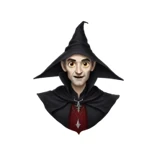
These are Llagos2025/prismatic-dark-fantasy DreamBooth LoRA weights, trained on krea/Krea-2-Raw. The weights were trained using DreamBooth with the Krea 2 diffusers trainer. Krea 2 ships as two checkpoints: RAW (the non-distilled base you fine-tune on) and Turbo (an 8-step distilled checkpoint for fast, high-quality inference). Train your LoRA on RAW and run it on Turbo — LoRAs trained on RAW express strongly on Turbo. You should use TOK to trigger the image generation. Download the.safetensors LoRA in the Files & versions tab. For more details, including weighting, merging and fusing LoRAs, check the documentation on loading LoRAs in diffusers [TODO: provide examples of latent issues and…
These are chaeyidpt001/prot-asim-kr2-002 DreamBooth LoRA weights, trained on krea/Krea-2-Raw. The weights were trained using DreamBooth with the Krea 2 diffusers trainer. Krea 2 ships as two checkpoints: RAW (the non-distilled base you fine-tune on) and Turbo (an 8-step distilled checkpoint for fast, high-quality inference). Train your LoRA on RAW and run it on Turbo — LoRAs trained on RAW express strongly on Turbo. You should use TOK to trigger the image generation. Download the.safetensors LoRA in the Files & versions tab. For more details, including weighting, merging and fusing LoRAs, check the documentation on loading LoRAs in diffusers [TODO: provide examples of latent issues and…
LoRA sobre stabilityai/stable-diffusion-xl-base-1.0, evolução incremental da PS-IMAGE-1.4: inicializada com os pesos 1.4 e continuada por +700 steps focados em texto. letras+números, captions em 5 línguas (80 EN / 80 PT / 80 ES / 80 FR / 80 DE) - 700 steps, batch efetivo 4, lr 3e-5 cosine, AdamW, min-SNR γ=5, T4, loss final 0.0057 - Checkpoints a cada 100 steps em checkpoints/step (dá p/ retomar o treino) O SDXL rende melhor em inglês. Jeito mais fiel — tradutor leve + 1.5: A 1.5 também treinou com captions PT/ES/FR/DE, então prompting direto nessas línguas funciona melhor que na 1.4 (ver textpt e textes abaixo) — mas traduzir p/ inglês continua sendo o mais fiel. Prompt (seed 24000): photo…

On-device text-to-image models for Android, prepared by Q-P1NG for its Q-Dream engine. 512×512 images in under one second on the Snapdragon 8 Elite NPU (estimated 1.1 s on 8 Gen 3 and 1.3 s on 8 Gen 2 from Qualcomm AI Hub profiles), and offline generation on the CPU of any arm64 phone with 6 GB of RAM or more. No server is involved: prompts and images never leave the phone. Every image below was generated with the CPU bundles of this repository (MNN int8 UNet, TAESD decoder) through the Q-Dream reference pipeline, which uses the same tokenizer, LCM sampler and decoder as the app: 512×512, 6 LCM steps, guidance 1.0, no negative prompt, no upscaling or retouching. The first row uses the same…

Fine-tuned Qwen Image 2.1 autoencoder for RGBA / HDR-oriented reconstruction. The goal is stronger dynamic range, color volume, and detail energy for HDR-style workflows—not perfect fidelity to the source frame. Relative to ground truth and compared with base Qwen 2.1 VAE (VAE A): VAE B deliberately overshoots GT on Lab color volume, edge density, and gradient energy. VAE A stays closer to GT on SSIM/PSNR but compresses color volume and softens detail. That tradeoff is the point of this checkpoint. - Uses the VAE’s own latentsmean / latentsstd (no FLUX/SD 0.18215 scaling) - Trained / evaluated around 512–1024 resolution; spatial size should be divisible by 16 - HDR-oriented encode/decode in…
A complete Hugging Face pipeline bundle with the Qwen-Image-2.1 DiT in NF4 and a compact Qwen3.5-0.8B NF4 student text encoder. A learned MLP adapter maps Qwen3.5's 1024-dimensional token features into Qwen-Image's 4096-dimensional text-conditioning space. VAE, scheduler, Qwen3-VL-compatible pipeline processor, student tokenizer, adapter, inference helper, and a generated sample are included. The adapter was distilled from the pinned Qwen-Image Qwen3-VL teacher on 192 synthetic training prompts and 32 validation prompts. Validation token-embedding cosine similarity reached 0.9392. This is an embedding alignment metric, not a guarantee of image-quality parity; the included sample is an…
Built with Qwen. Non-commercial research and evaluation use only (Qwen Research License, see LICENSE and NOTICE). An NVFP4 quantization of Qwen/Qwen-Image-2.1, made from the official BF16 weights with SVDQuant + GPTQ and calibrated on both text-to-image prompts and image edits. Both large components run on native Blackwell FP4 tensor cores, and the pipeline loads with a single DiffusionPipeline.frompretrained call. At 512x512 on an RTX PRO 6000 Blackwell it is about 1.7x faster than BF16 and needs about 40% less VRAM, and it matches BF16 closely on text-to-image, typography and edits, including a hard recolor edit that earlier 4-bit text encoders failed. trustremotecode=True loads two small…
Qwen-Image-2.1-Turbo is an accelerated checkpoint of Qwen-Image-2.1 for text-to-image generation and image editing with 8 denoising steps. It uses the same 7B visual generation architecture and loads directly with QwenImage21Pipeline in Diffusers. The checkpoint includes its recommended sampling schedule, so it is ready to use without manually configuring the scheduler. Generation uses CFG=1 by default, and prefix KV caching reuses the text and reference-image context across denoising steps. For more details, see the GitHub repo and Qwen-Image-2.1 blog. Install a CUDA-compatible PyTorch build, then install the latest Diffusers source and the following dependencies: This checkpoint requires…
This repository provides native MLX BF16 weights for Qwen/Qwen-Image-2.1-Turbo, combined with the uncensored Heretic vision-language text encoder and the original full-precision FP32 VAE. It is ready to run directly on Apple Silicon via mflux. - 8-Step Distilled Inference: Uses the official Qwen-Image-2.1-Turbo DiT checkpoint for fast, high-quality 8-step generation without needing any external acceleration LoRA. - Official qwenturbo Sampling Sigmas: Tuned to the exact official samplesigmas grid ([1.0, 0.978453, 0.95418, 0.926626, 0.89508, 0.845148, 0.704534, 0.414568, 0.0]).

v0.1 - Rank 32 LoRA trained with Mean Flow Distillation up to 2.1 megapixels
This is a BF16 MFlux version of Qwen-Image-2.1-Turbo. MFlux runs the latest state-of-the-art generative image models locally on your Mac in native MLX. MFlux is open source and free. Converted with MFlux 0.22.0 on 2026-10-11. BF16 is the full-precision MLX build -- no quantization. Use it as the highest-fidelity reference, or pass --quantize to quantize on the fly. Install MFlux Generate an image using Qwen-Image-2.1-Turbo BF16: The weights are downloaded from this repo on first use. To keep a local copy instead: then pass --model./qwen-image-2-1-turbo-mflux-bf16. This repo inherits the license of the original model: qwen-research. See the original model card for the full terms and any…
This is a Q4 MFlux version of Qwen-Image-2.1-Turbo. MFlux runs the latest state-of-the-art generative image models locally on your Mac in native MLX. MFlux is open source and free. Converted with MFlux 0.22.0 on 2026-10-11. Standard MFlux quantization uses MLX affine quantization (4-bit) across the text encoder, transformer and VAE. The quantization level is stored in the weights, so no --quantize flag is needed. Install MFlux Generate an image using Qwen-Image-2.1-Turbo Q4: The weights are downloaded from this repo on first use. To keep a local copy instead: then pass --model./qwen-image-2-1-turbo-mflux-q4. This repo inherits the license of the original model: qwen-research. See the…
This is a Q5 MFlux version of Qwen-Image-2.1-Turbo. MFlux runs the latest state-of-the-art generative image models locally on your Mac in native MLX. MFlux is open source and free. Converted with MFlux 0.22.0 on 2026-10-11. Standard MFlux quantization uses MLX affine quantization (5-bit) across the text encoder, transformer and VAE. The quantization level is stored in the weights, so no --quantize flag is needed. Install MFlux Generate an image using Qwen-Image-2.1-Turbo Q5: The weights are downloaded from this repo on first use. To keep a local copy instead: then pass --model./qwen-image-2-1-turbo-mflux-q5. This repo inherits the license of the original model: qwen-research. See the…
This is a Q6 MFlux version of Qwen-Image-2.1-Turbo. MFlux runs the latest state-of-the-art generative image models locally on your Mac in native MLX. MFlux is open source and free. Converted with MFlux 0.22.0 on 2026-10-11. Standard MFlux quantization uses MLX affine quantization (6-bit) across the text encoder, transformer and VAE. The quantization level is stored in the weights, so no --quantize flag is needed. Install MFlux Generate an image using Qwen-Image-2.1-Turbo Q6: The weights are downloaded from this repo on first use. To keep a local copy instead: then pass --model./qwen-image-2-1-turbo-mflux-q6. This repo inherits the license of the original model: qwen-research. See the…
This is a Q8 MFlux version of Qwen-Image-2.1-Turbo. MFlux runs the latest state-of-the-art generative image models locally on your Mac in native MLX. MFlux is open source and free. Converted with MFlux 0.22.0 on 2026-10-11. Standard MFlux quantization uses MLX affine quantization (8-bit) across the text encoder, transformer and VAE. The quantization level is stored in the weights, so no --quantize flag is needed. Install MFlux Generate an image using Qwen-Image-2.1-Turbo Q8: The weights are downloaded from this repo on first use. To keep a local copy instead: then pass --model./qwen-image-2-1-turbo-mflux-q8. This repo inherits the license of the original model: qwen-research. See the…
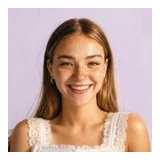
A community OpenVINO conversion of the official eight-step Qwen Image 2.1 Turbo checkpoint, prepared for local inference in Fern. This is not an official Qwen release or an endorsement by Qwen or Hugging Face. Install Qwen Image 2.1 Turbo from Fern → Preferences → Image models. Fern downloads the pinned OpenVINO export and matching runtime dependencies. The first generation compiles a device-specific OpenVINO cache locally; those cache files are not part of this repository. The model files occupy about 23.2 GB. Allow extra free space for temporary download data and the compiled cache. Intel GPU is the default target; CPU is an explicit fallback. The upstream Qwen Research License applies to…

GGUF quantizations of Qwen/Qwen-Image-2.1 for local image generation using the original upstream base weights. Q4KM is recommended for the best balance of size and quality. Companion model files packaged for ComfyUI: Use the model with ComfyUI and ComfyUI-GGUF. All required companion files (GGUF transformer, text encoder, and VAE) are hosted directly in this repository. Download the files and place them in their respective ComfyUI directories: 1. Install ComfyUI-GGUF: Use the maintained fork with native Qwen-Image 2.1 support by cloning leejet/ComfyUI-GGUF into your custom nodes: (Note: If you have the older city96/ComfyUI-GGUF installed and encounter an Unknown model architecture! error…
GGUF quantizations of Qwen/Qwen-Image-2.1 for local image generation using the original upstream base weights. Q4KM is recommended for the best balance of size and quality. Companion model files packaged for ComfyUI: Use the model with ComfyUI and ComfyUI-GGUF. All required companion files (GGUF transformer, text encoder, and VAE) are hosted directly in this repository. Download the files and place them in their respective ComfyUI directories: 1. Install ComfyUI-GGUF: Use the maintained fork with native Qwen-Image 2.1 support by cloning leejet/ComfyUI-GGUF into your custom nodes: (Note: If you have the older city96/ComfyUI-GGUF installed and encounter an Unknown model architecture! error…
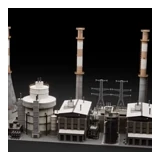
GGUF quantizations of Qwen/Qwen-Image-2.1 for local image generation using the original upstream base weights. Q4KM is recommended for the best balance of size and quality. Companion model files packaged for ComfyUI: Use the model with ComfyUI and ComfyUI-GGUF. All required companion files (GGUF transformer, text encoder, and VAE) are hosted directly in this repository. Download the files and place them in their respective ComfyUI directories: 1. Install ComfyUI-GGUF: Use the maintained fork with native Qwen-Image 2.1 support by cloning leejet/ComfyUI-GGUF into your custom nodes: (Note: If you have the older city96/ComfyUI-GGUF installed and encounter an Unknown model architecture! error…


OpenVINO IR build of Qwen-Image-2.1 with an abliterated text encoder, quantized to INT4. Runs text-to-image on Intel Arc iGPUs. Uncensoring lives in the prompt-embedding path, so only the Qwen3-VL text encoder needed replacing — the transformer, VAE and vision encoder are the stock model. Total ~13 GB. Embeddings for "a portrait of a woman, photorealistic" differ decisively from the stock encoder — this is not a renamed copy: Intel Core Ultra 7 258V, Arc 130V/140V iGPU, 8 cores, 30 GB RAM: Requires the nightly stack: diffusers and optimum-intel from main, plus OpenVINO 2026.5.0 nightly. See the full conversion write-up…

NOTICE: After ~23 iterations of this "all in one", I'm winding down providing updates. v19 is likely best for consistency in edits, while v23 is likely best for prompt adherence. I feel this project has peaked as new image edit models are being released. Thank you for all the feedback and help! Merge of accelerators, VAE and CLIP to allow for easy and fast Qwen Image Edit (and text to image) support. Use a "Load Checkpoint" node. 1 CFG, 4 step. Use the "TextEncodeQwenImageEditPlus" node for input images (which are optional) and prompt. Provide no images to just do pure text to image. FP8 precision. Both NSFW and SFW models are available! v4 and older combine both NSFW and SFW uses in one…
A DreamBooth-LoRA for Krea 2, trained on Krea 2 RAW and shown on Krea 2 Turbo. The samples below were generated with this LoRA on Turbo (8 steps). Use the token r3iko2 to invoke the concept.
Diffusers pipelines for Rectified-CFG++, a training-free guidance method for rectified-flow models (NeurIPS 2025). This repo has no weights. It holds pipeline code that you load on top of an existing checkpoint with custompipeline. Classifier-free guidance (CFG) extrapolates from the unconditional velocity toward the conditional one at every ODE step. On rectified-flow models this extrapolation pushes samples off the learned data manifold, and at high guidance scales the images show over-saturated colours and broken structure. Rectified-CFG++ replaces that extrapolation with a predictor-corrector update: 1. Predictor: take a step along the conditional velocity from the current point. 2.…

This repository provides rh-2030206650044391426-lora weight files. You can load them on RunningHub. Published by RunningHub on behalf of the author. Copyright remains with the author. Follow the original project or upstream license. Run Seedance 2.5 with RunningHub API: https://www.runninghub.ai/call-api/api-detail/2133100000000700025 - RunningHub:https://www.runninghub.ai - RunningHub 中国站:https://www.runninghub.cn - RunningHub API 文档:https://www.runninghub.cn/runninghub-api-doc-cn/ - RunningHub API Documentation:https://www.runninghub.cn/runninghub-api-doc-en/
This repository provides rh-2083519874508349441-lora weight files. You can load them on RunningHub. Published by RunningHub on behalf of the author. Copyright remains with the author. Follow the original project or upstream license. Run Seedance 2.5 with RunningHub API: https://www.runninghub.ai/call-api/api-detail/2133100000000700025 - RunningHub:https://www.runninghub.ai - RunningHub 中国站:https://www.runninghub.cn - RunningHub API 文档:https://www.runninghub.cn/runninghub-api-doc-cn/ - RunningHub API Documentation:https://www.runninghub.cn/runninghub-api-doc-en/
This repository provides rh-47z-image-lora weight files. You can load them on RunningHub. Published by RunningHub on behalf of the author. Copyright remains with the author. Follow the original project or upstream license. Run Seedance 2.5 with RunningHub API: https://www.runninghub.ai/call-api/api-detail/2133100000000700025 - RunningHub:https://www.runninghub.ai - RunningHub 中国站:https://www.runninghub.cn - RunningHub API 文档:https://www.runninghub.cn/runninghub-api-doc-cn/ - RunningHub API Documentation:https://www.runninghub.cn/runninghub-api-doc-en/
This repository provides rh-b-lora weight files. You can load them on RunningHub. Published by RunningHub on behalf of the author. Copyright remains with the author. Follow the original project or upstream license. Run Seedance 2.5 with RunningHub API: https://www.runninghub.ai/call-api/api-detail/2133100000000700025 - RunningHub:https://www.runninghub.ai - RunningHub 中国站:https://www.runninghub.cn - RunningHub API 文档:https://www.runninghub.cn/runninghub-api-doc-cn/ - RunningHub API Documentation:https://www.runninghub.cn/runninghub-api-doc-en/
This repository provides rh-f2-klein-9b-2.0-lora weight files. You can load them on RunningHub. Published by RunningHub on behalf of the author. Copyright remains with the author. Follow the original project or upstream license. Run Seedance 2.5 with RunningHub API: https://www.runninghub.ai/call-api/api-detail/2133100000000700025 - RunningHub:https://www.runninghub.ai - RunningHub 中国站:https://www.runninghub.cn - RunningHub API 文档:https://www.runninghub.cn/runninghub-api-doc-cn/ - RunningHub API Documentation:https://www.runninghub.cn/runninghub-api-doc-en/
This repository provides rh-f2-klein-9b-2.0-lora weight files. You can load them on RunningHub. Published by RunningHub on behalf of the author. Copyright remains with the author. Follow the original project or upstream license. Run Seedance 2.5 with RunningHub API: https://www.runninghub.ai/call-api/api-detail/2133100000000700025 - RunningHub:https://www.runninghub.ai - RunningHub 中国站:https://www.runninghub.cn - RunningHub API 文档:https://www.runninghub.cn/runninghub-api-doc-cn/ - RunningHub API Documentation:https://www.runninghub.cn/runninghub-api-doc-en/
This repository provides rh-f2-klein-9b-enlarge-chest-2.0-lora weight files. You can load them on RunningHub. Published by RunningHub on behalf of the author. Copyright remains with the author. Follow the original project or upstream license. Run Seedance 2.5 with RunningHub API: https://www.runninghub.ai/call-api/api-detail/2133100000000700025 - RunningHub:https://www.runninghub.ai - RunningHub 中国站:https://www.runninghub.cn - RunningHub API 文档:https://www.runninghub.cn/runninghub-api-doc-cn/ - RunningHub API Documentation:https://www.runninghub.cn/runninghub-api-doc-en/
This repository provides rh-f2k4b-anything2real-ai-lora weight files. You can load them on RunningHub. Published by RunningHub on behalf of the author. Copyright remains with the author. Follow the original project or upstream license. Run Seedance 2.5 with RunningHub API: https://www.runninghub.ai/call-api/api-detail/2133100000000700025 - RunningHub:https://www.runninghub.ai - RunningHub 中国站:https://www.runninghub.cn - RunningHub API 文档:https://www.runninghub.cn/runninghub-api-doc-cn/ - RunningHub API Documentation:https://www.runninghub.cn/runninghub-api-doc-en/
Questions
Which Text to image models are most downloaded?
By monthly downloads reported by the Hugging Face Hub: .